USA – 2 Aug 2026
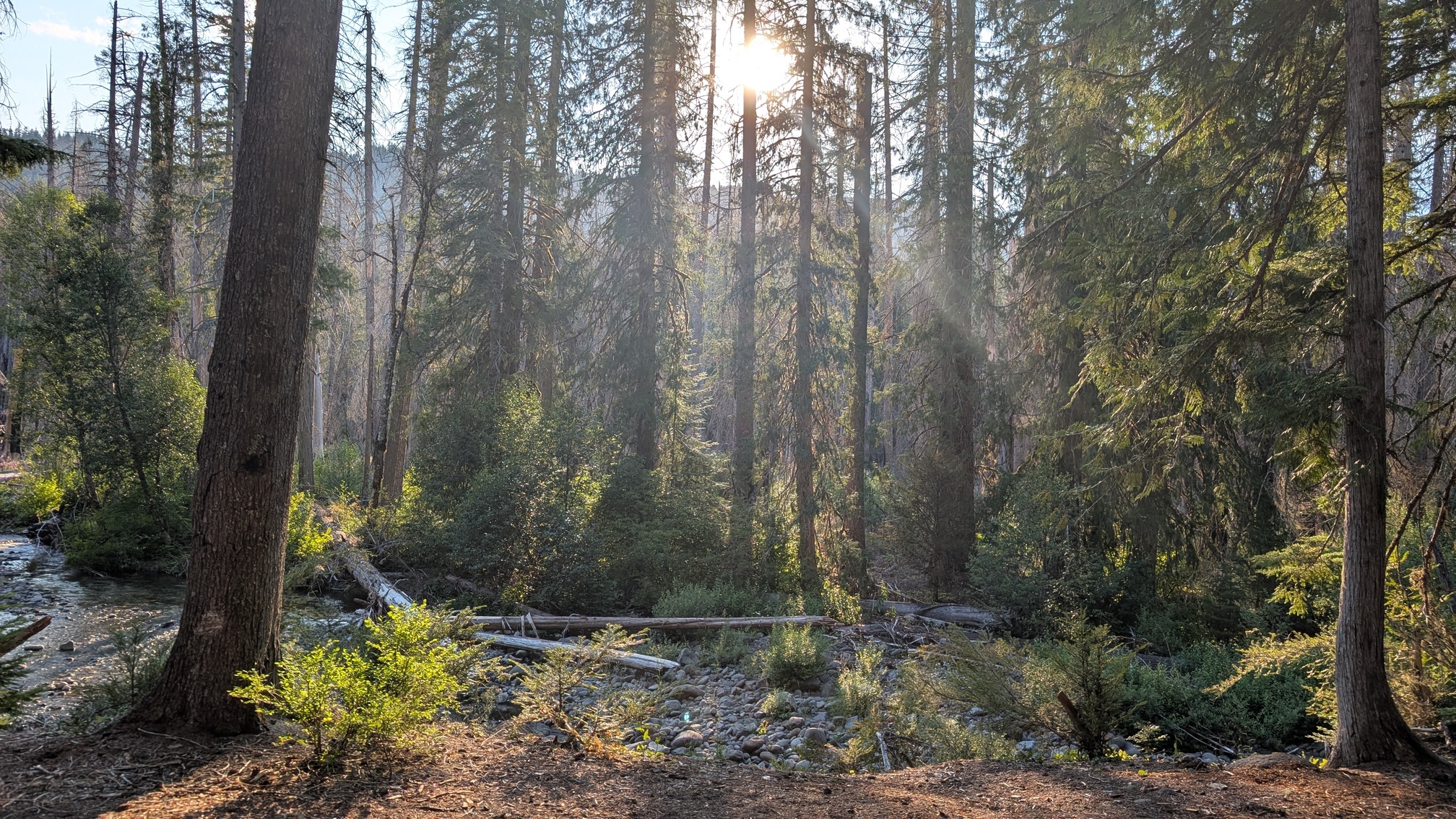
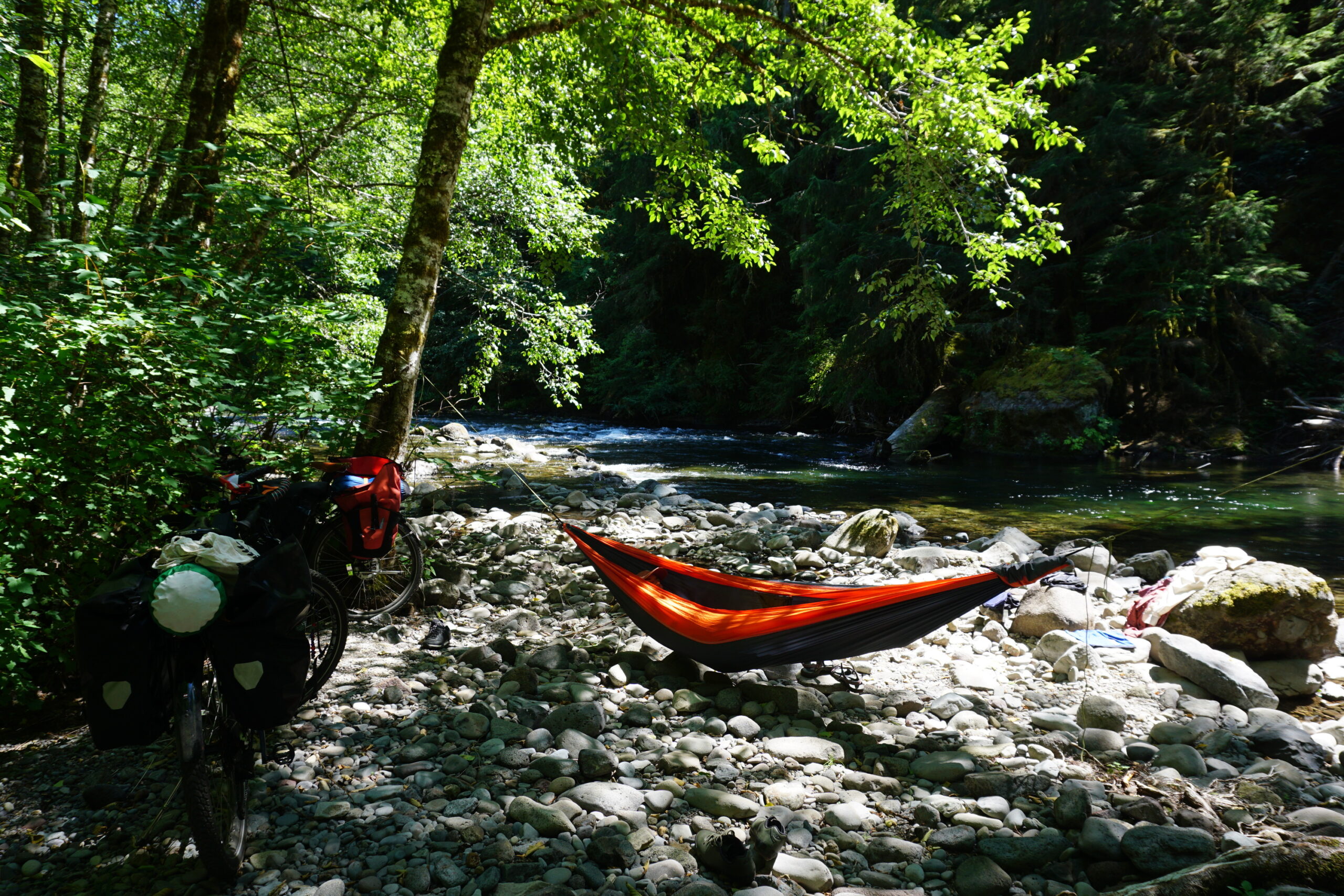
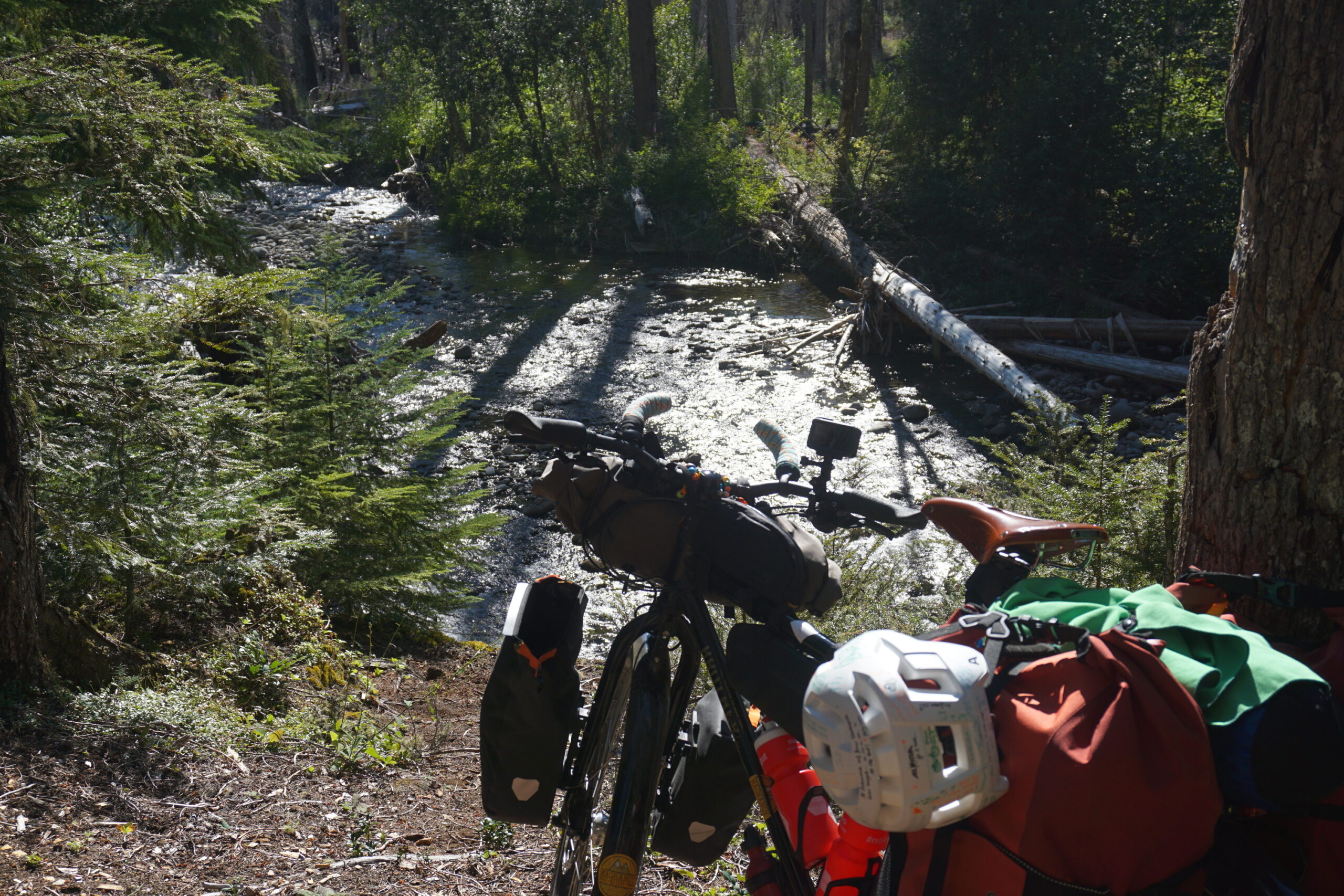
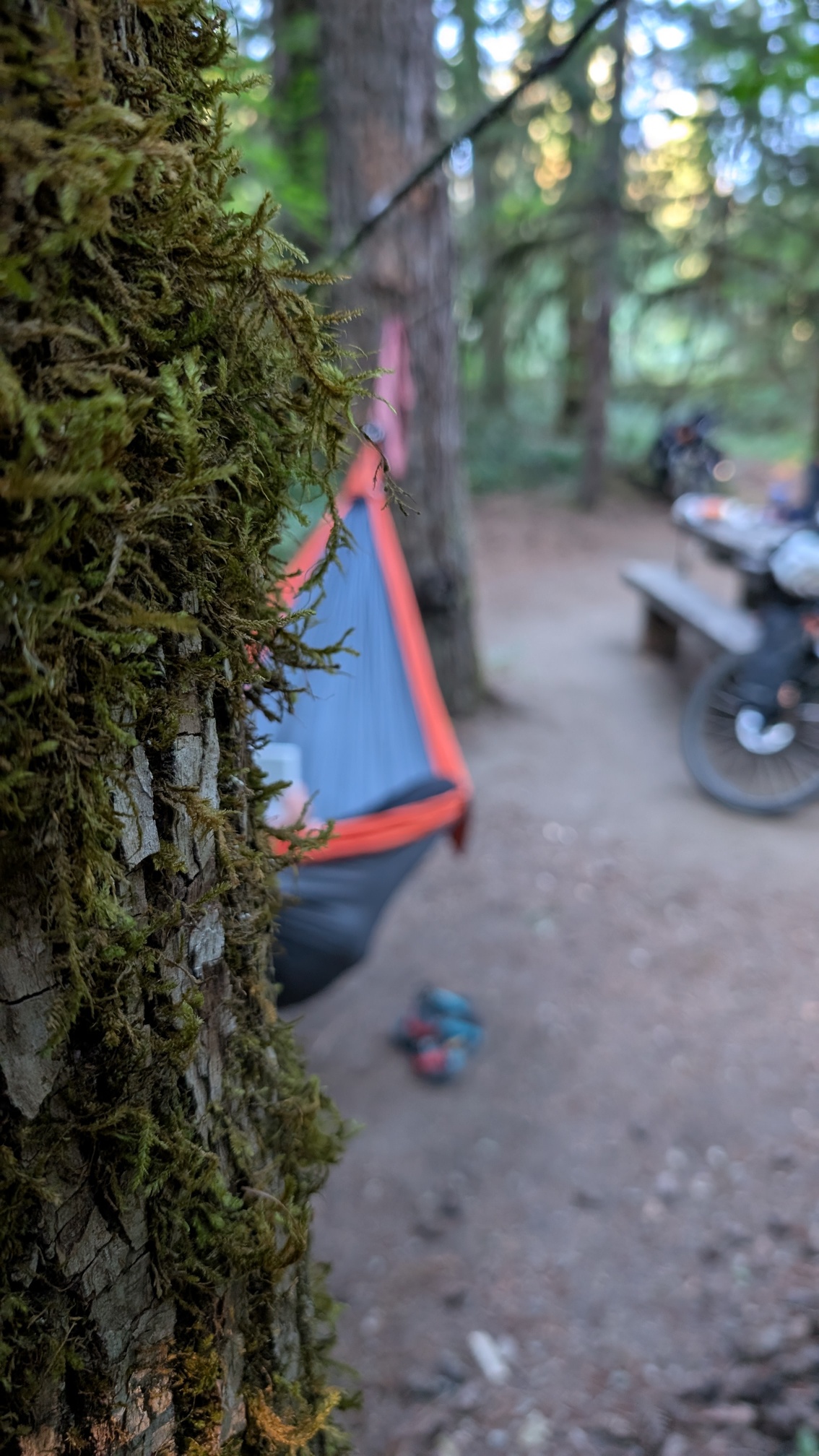
As I write these lines, I’m sitting beneath tall Douglas firs, whose massive trunks soar skyward. The forest here is dense and covered in moss. Nature shimmers all around me in a wide variety of shades of green. Next to me, a blue, ice-cold river rushes by—it has already served as our “shower” today.
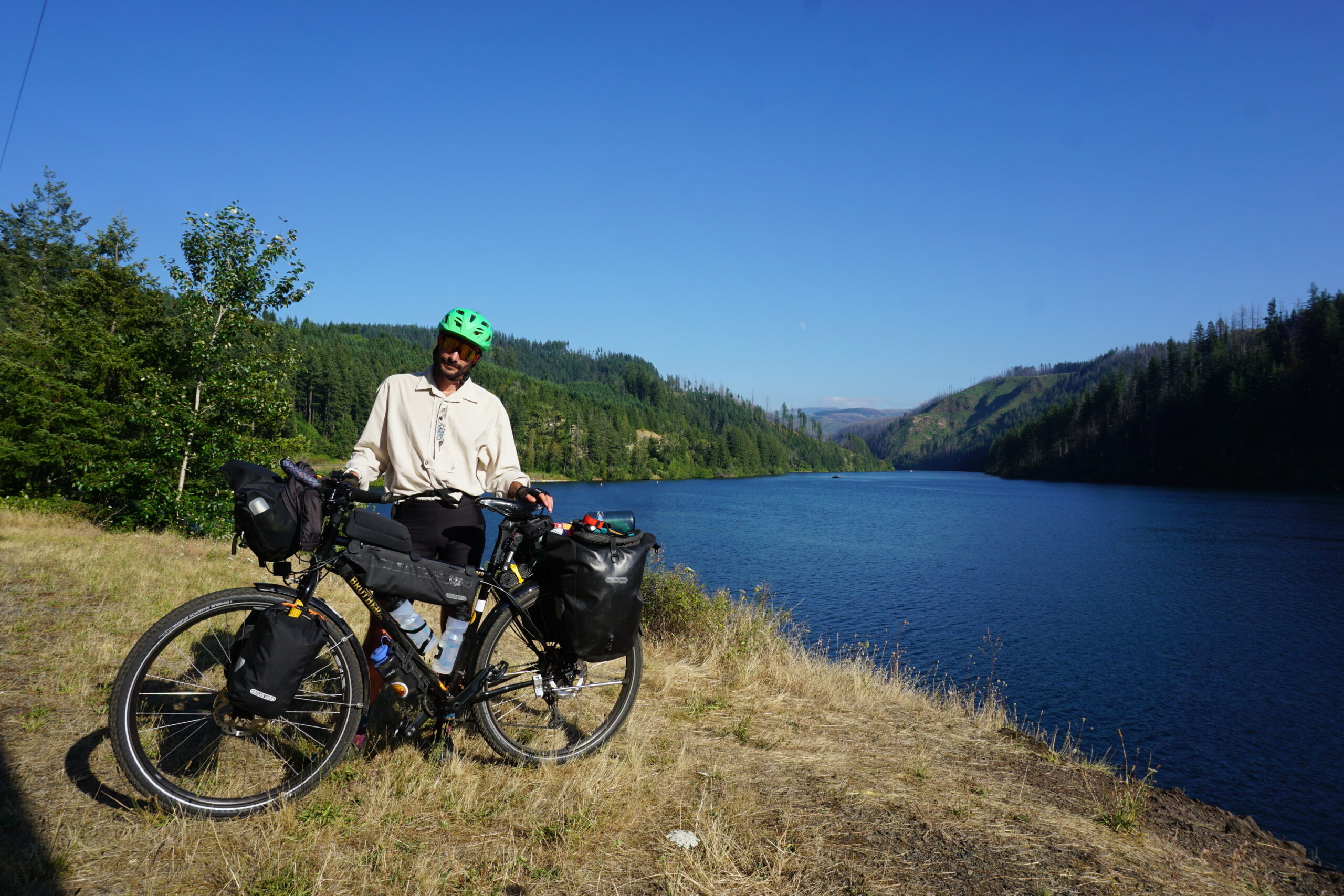
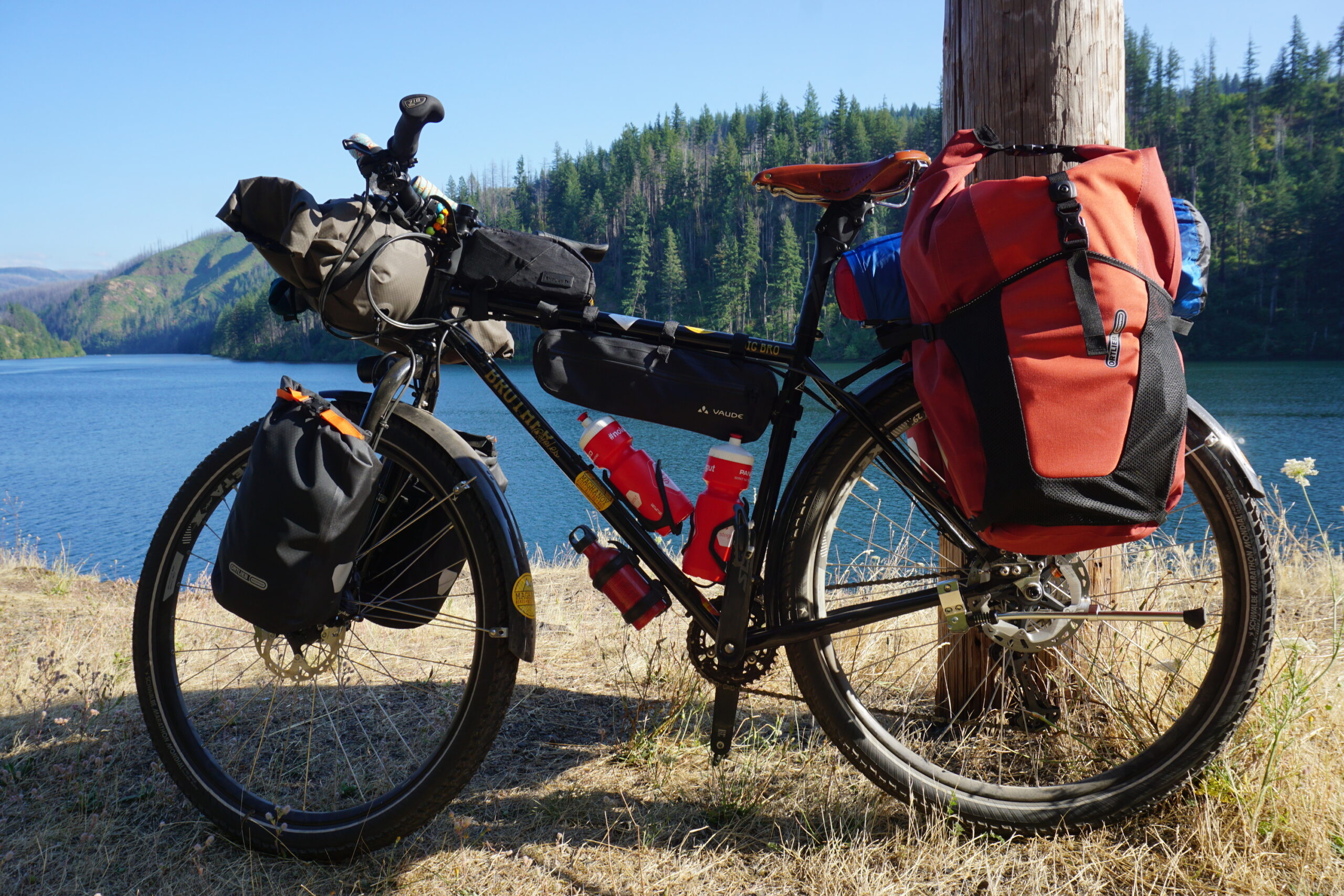
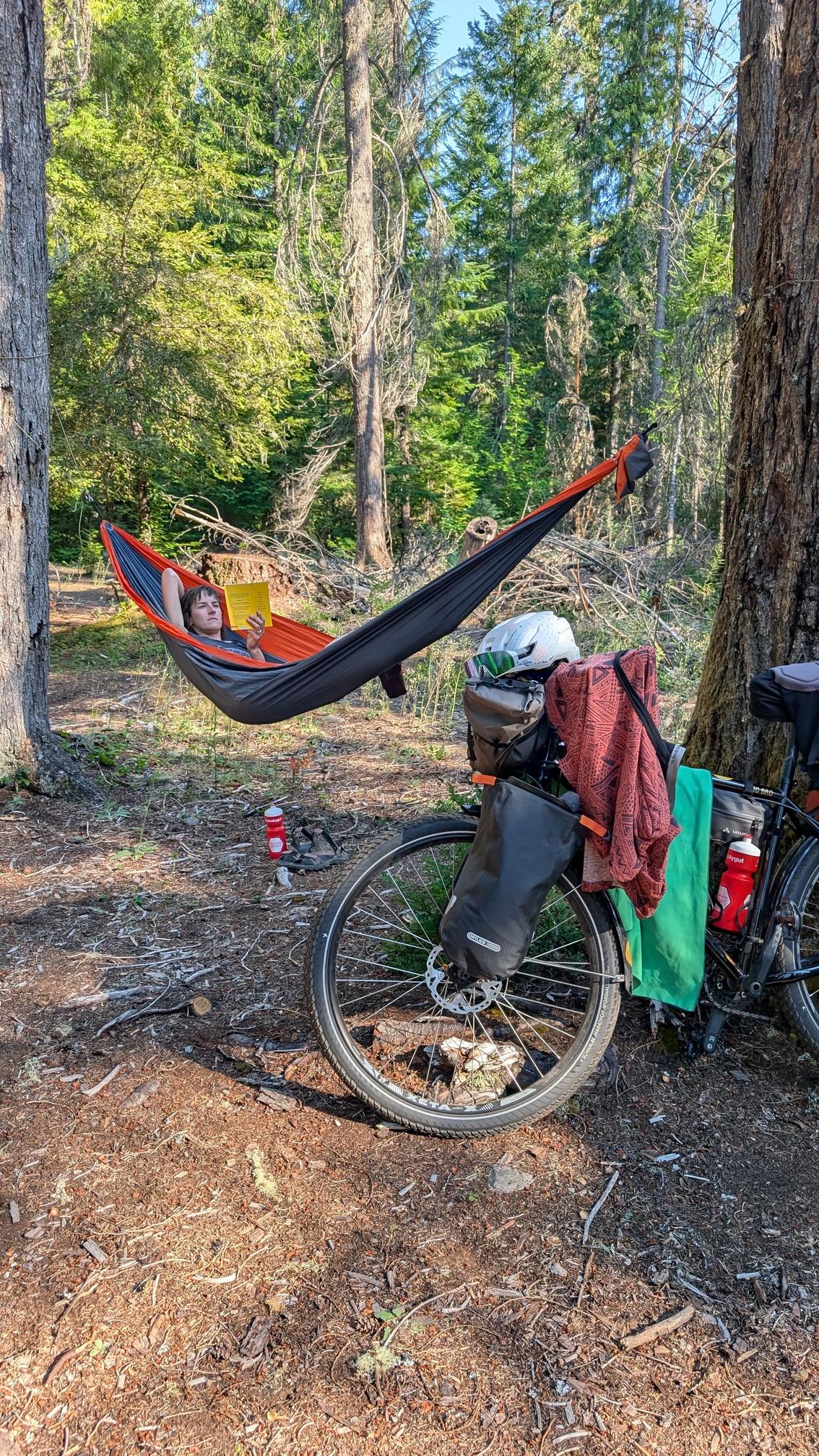
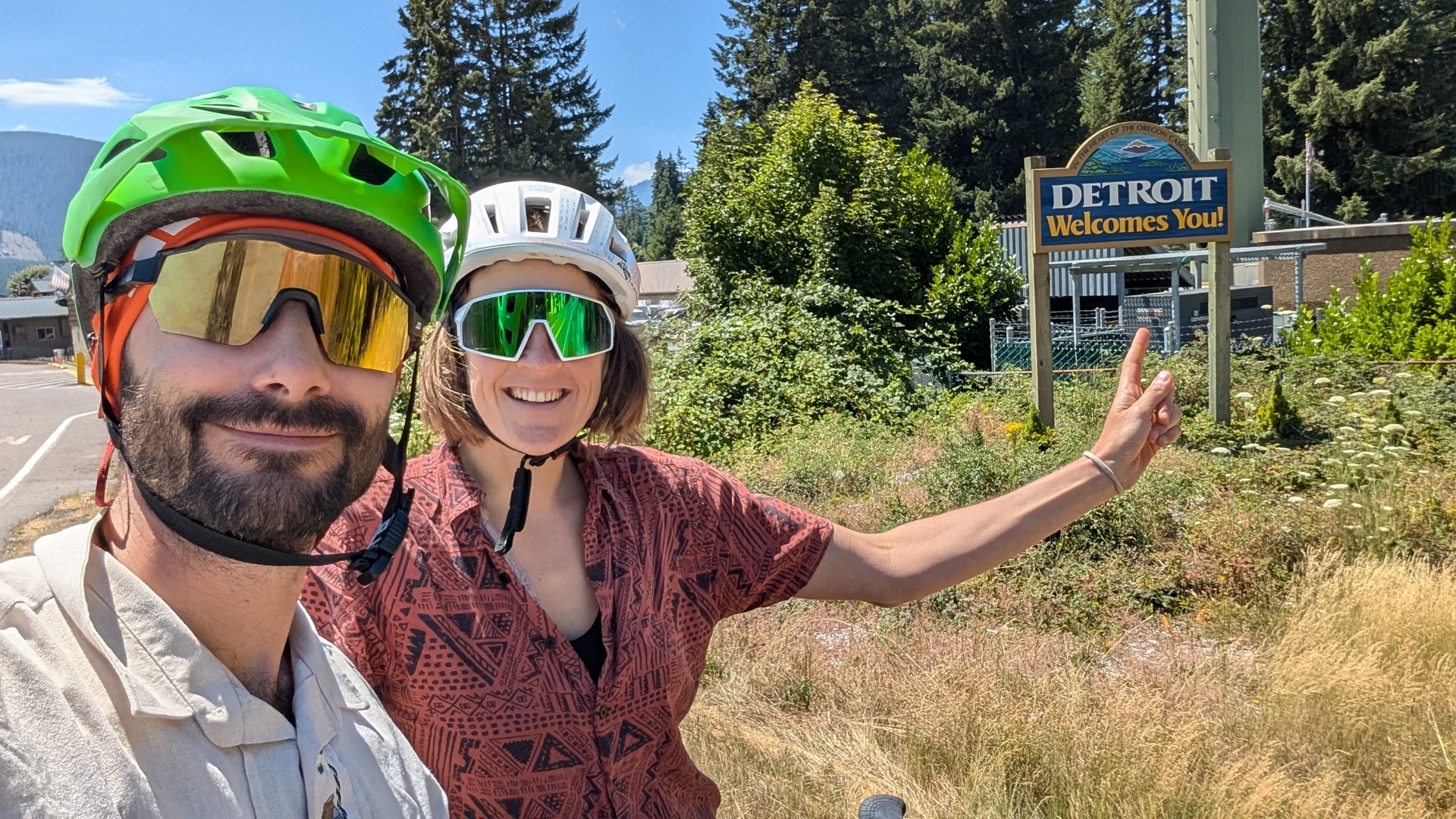
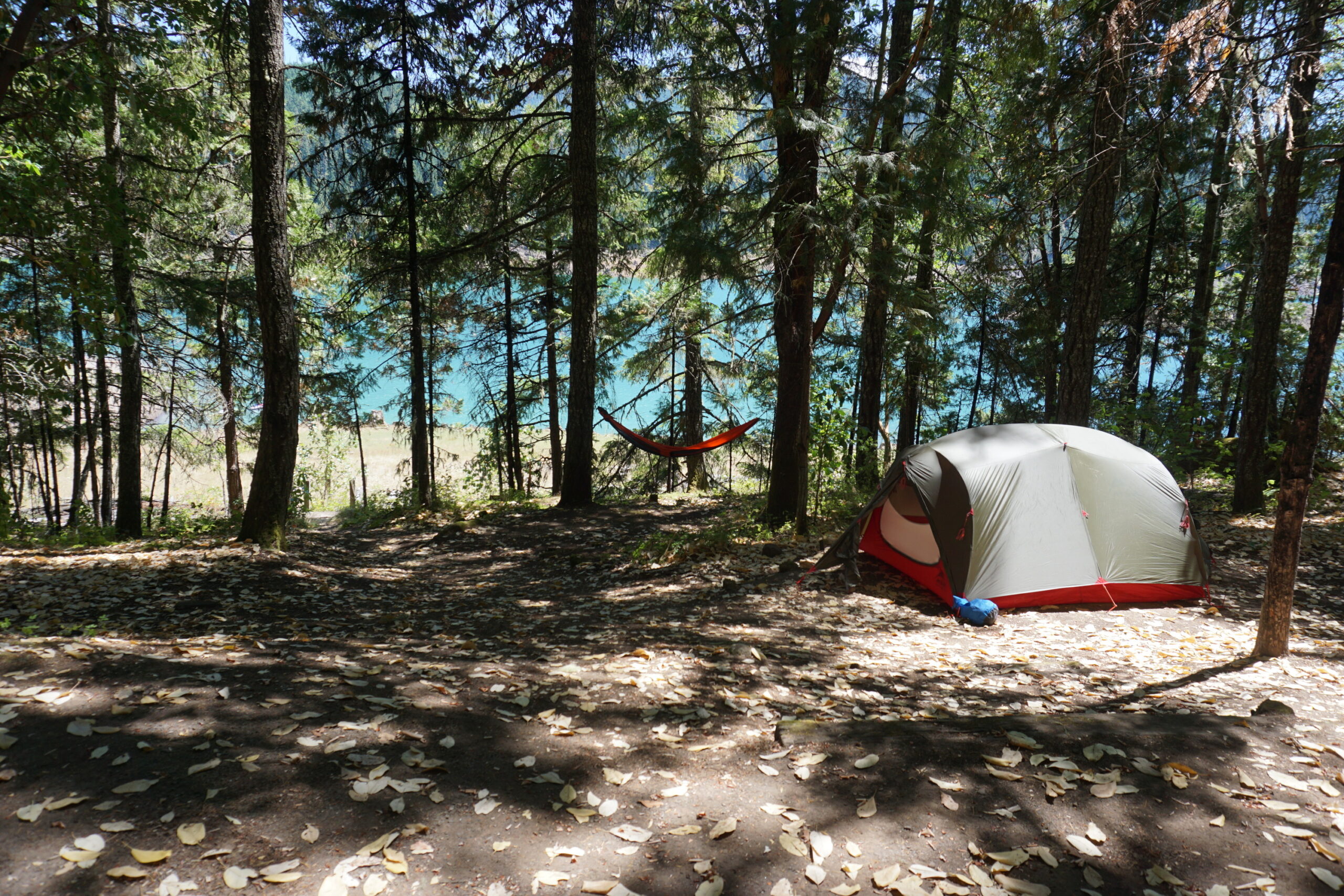
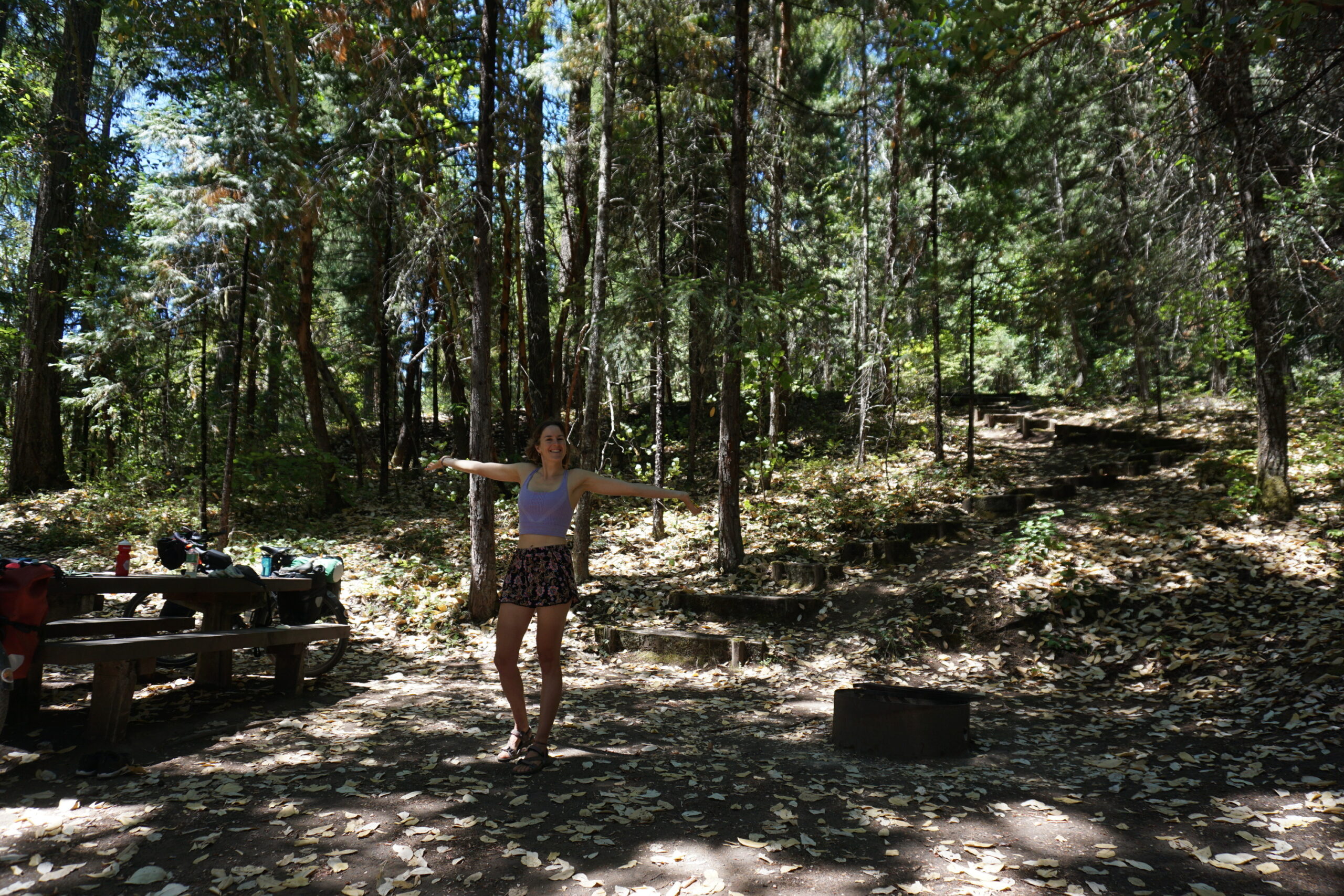
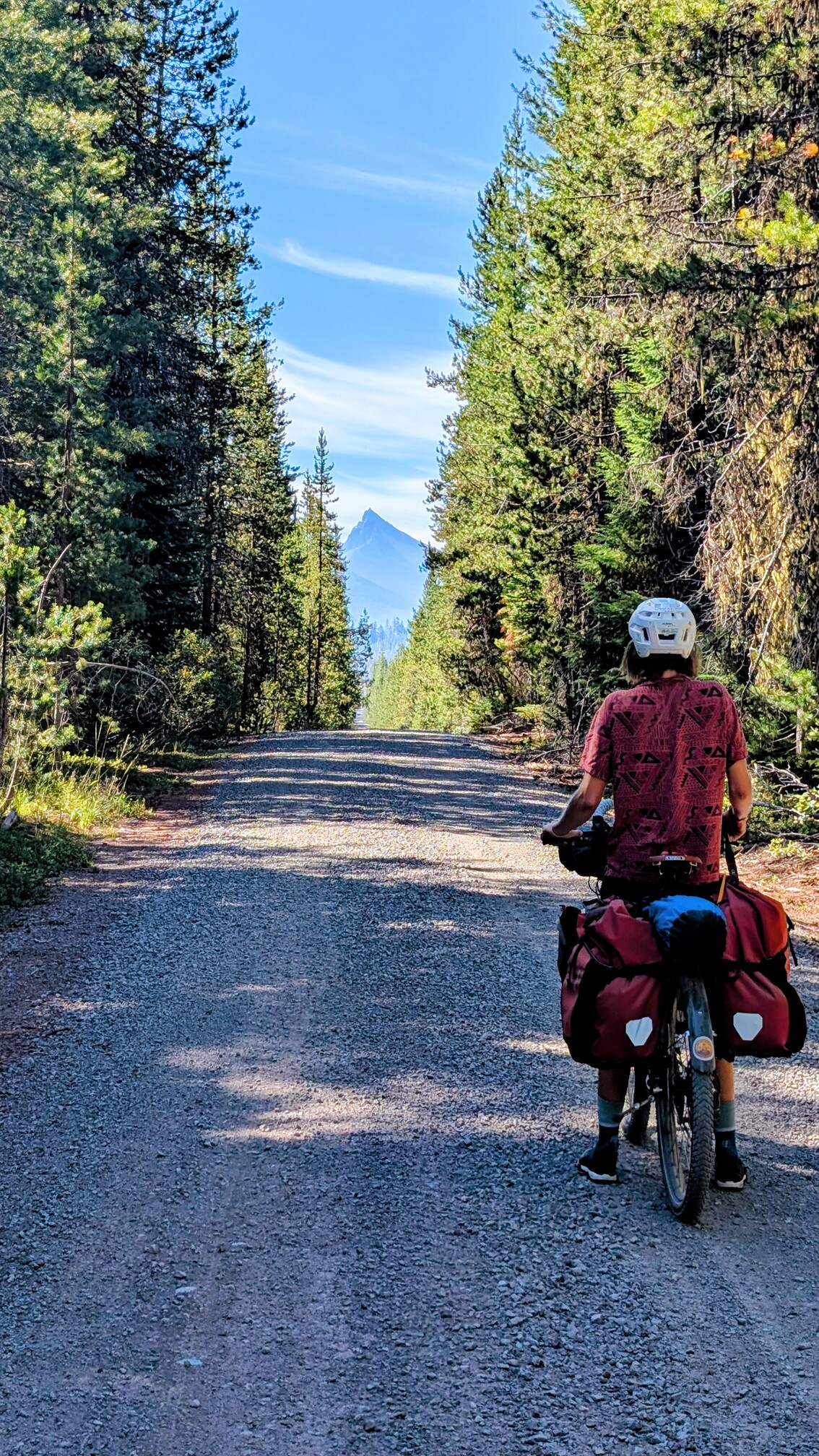
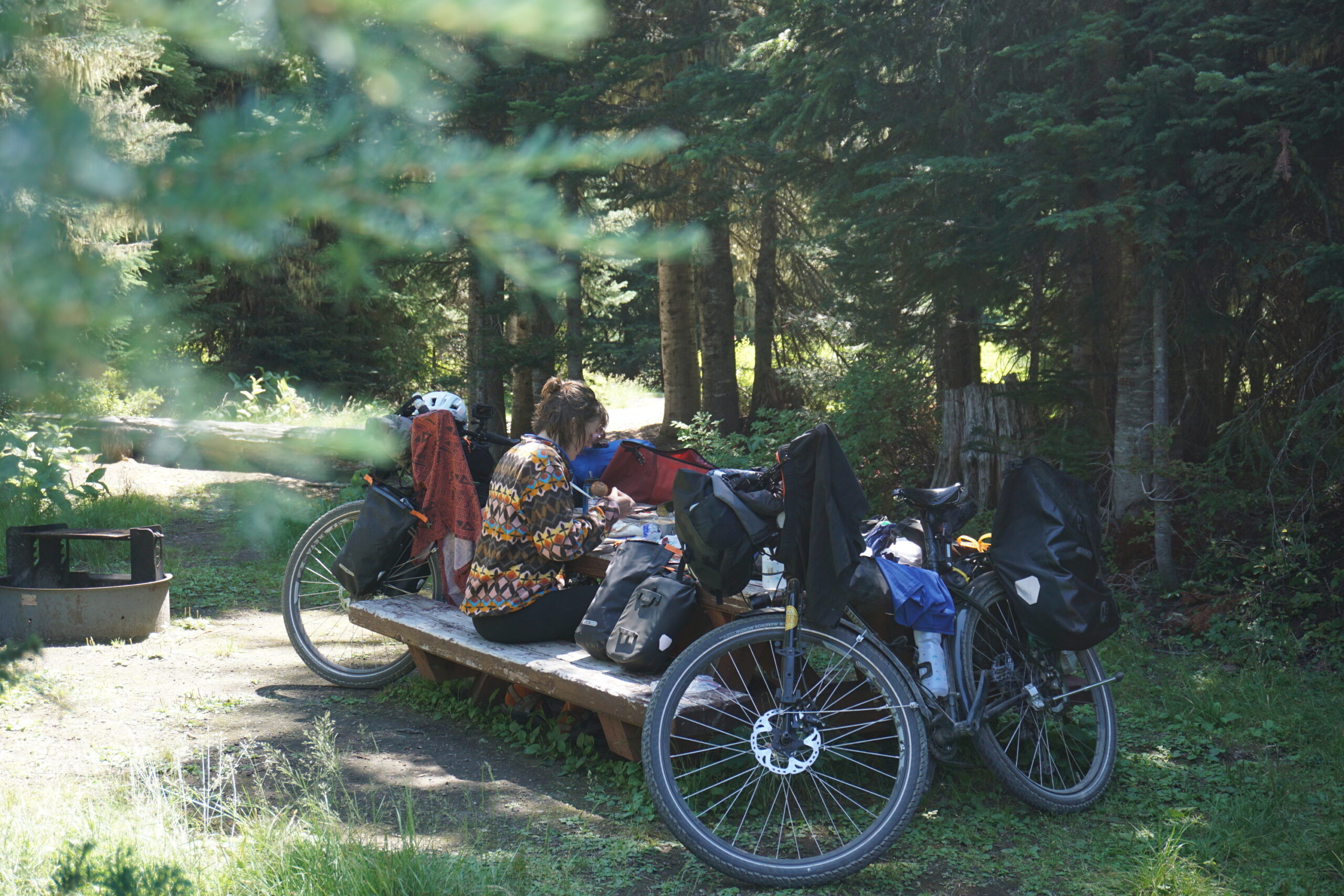
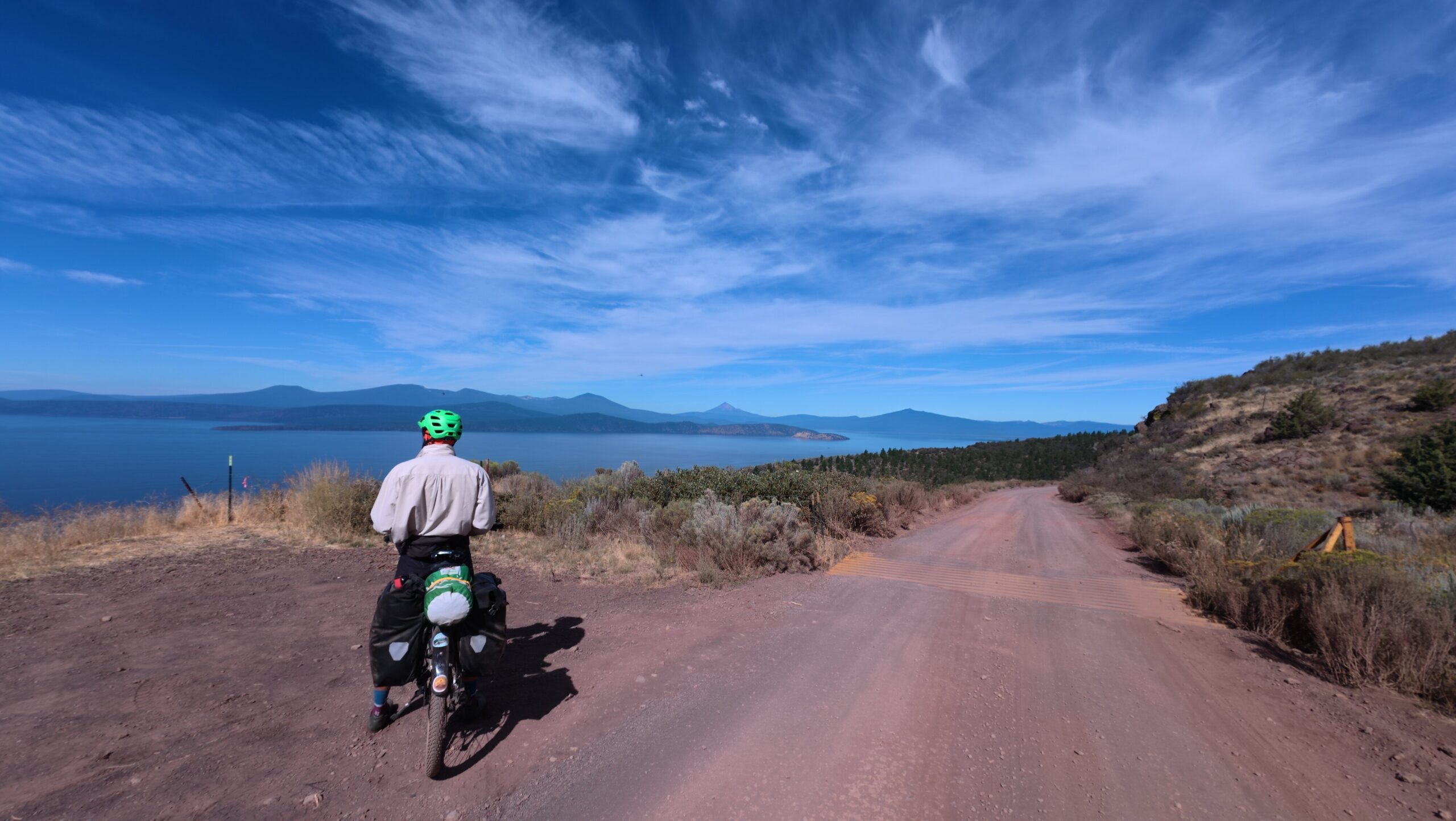
A few days ago, we decided to head into the mountains and follow the Oregon Cascades Volcanic Arc (OCVA) Trail. This route takes us east of Portland into dense forests and over several mountains, requiring us to climb quite a few meters in elevation. There are far fewer cars here; most of the time, we’re all alone on forest roads, trails, or quiet paved roads. We love this kind of wilderness and solitude, especially now at the start of our journey, when we’re still finding our rhythm and getting used to this new “daily routine.” Of course, this route also comes with its share of challenges. We’re much farther away from civilization; while there are villages and campgrounds here and there (and quite a few of them, though many are very basic—no showers, no reception desk, just a spot with a table and maybe a fire pit), we still have to plan our food supply carefully here. What’s for breakfast, and how much? How many granola bars can I eat today so I’ll have enough to last until the next place to shop? Will the fuel in our camping stoves last for the next few days to the next gas station? We can’t forget that we’re traveling very slowly by bike. In an emergency, we’d certainly get help from the people we occasionally meet along the way – but we would also like to manage it on our own. But of course, we’re not about to turn down a refreshing lemonade from our tent neighbors at the wild camping spot 😉 (Gracias, chicos!)
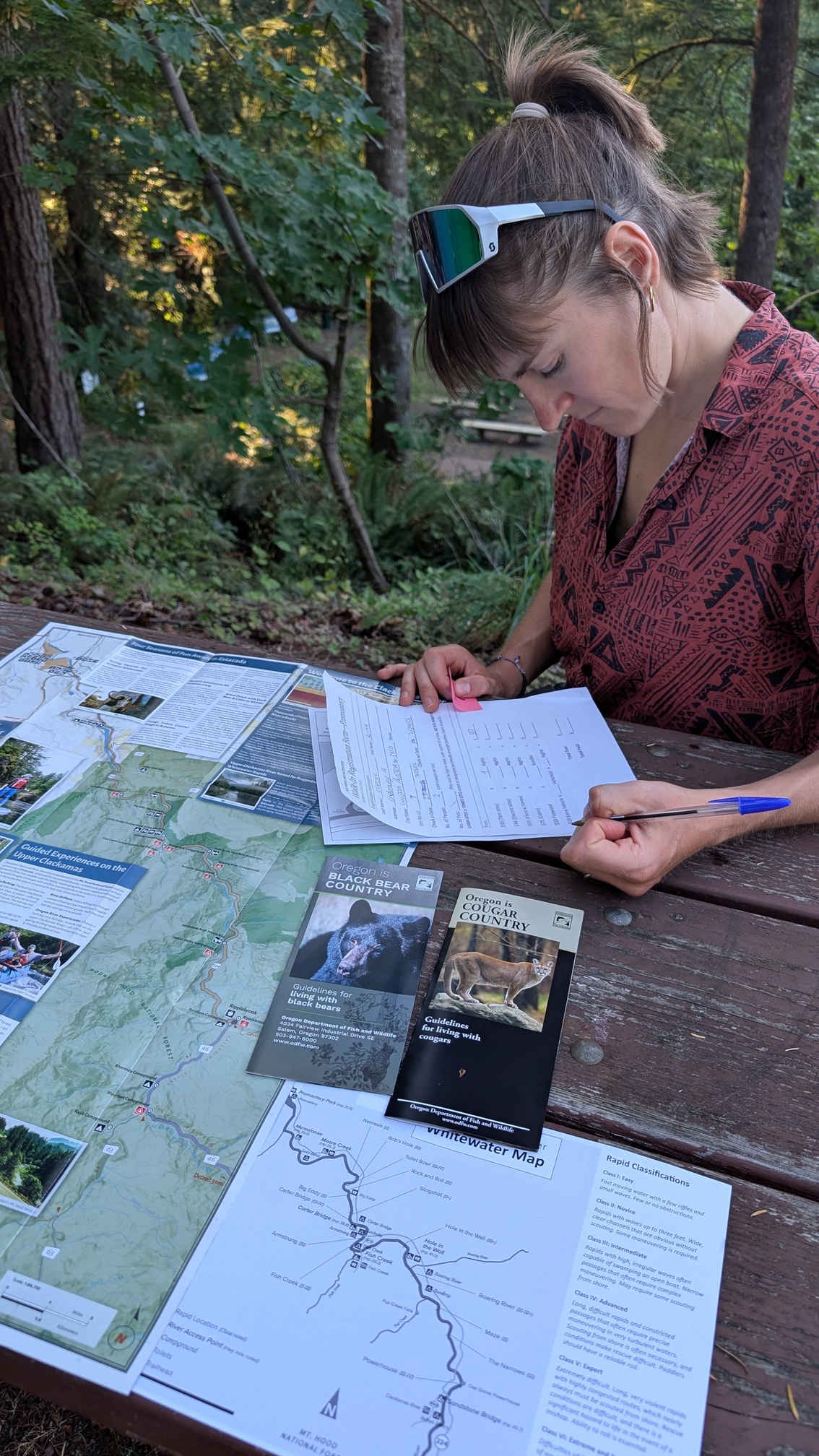
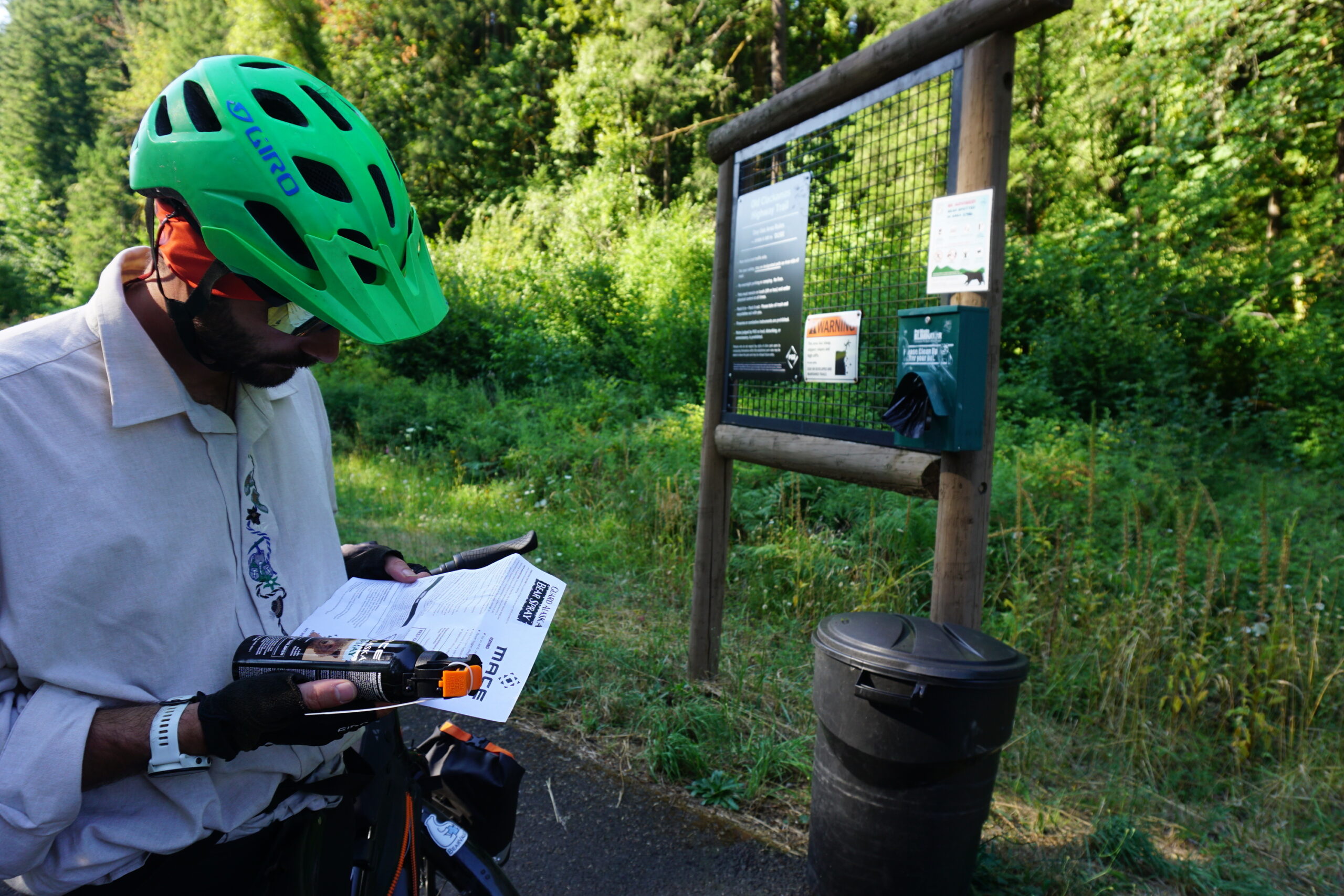
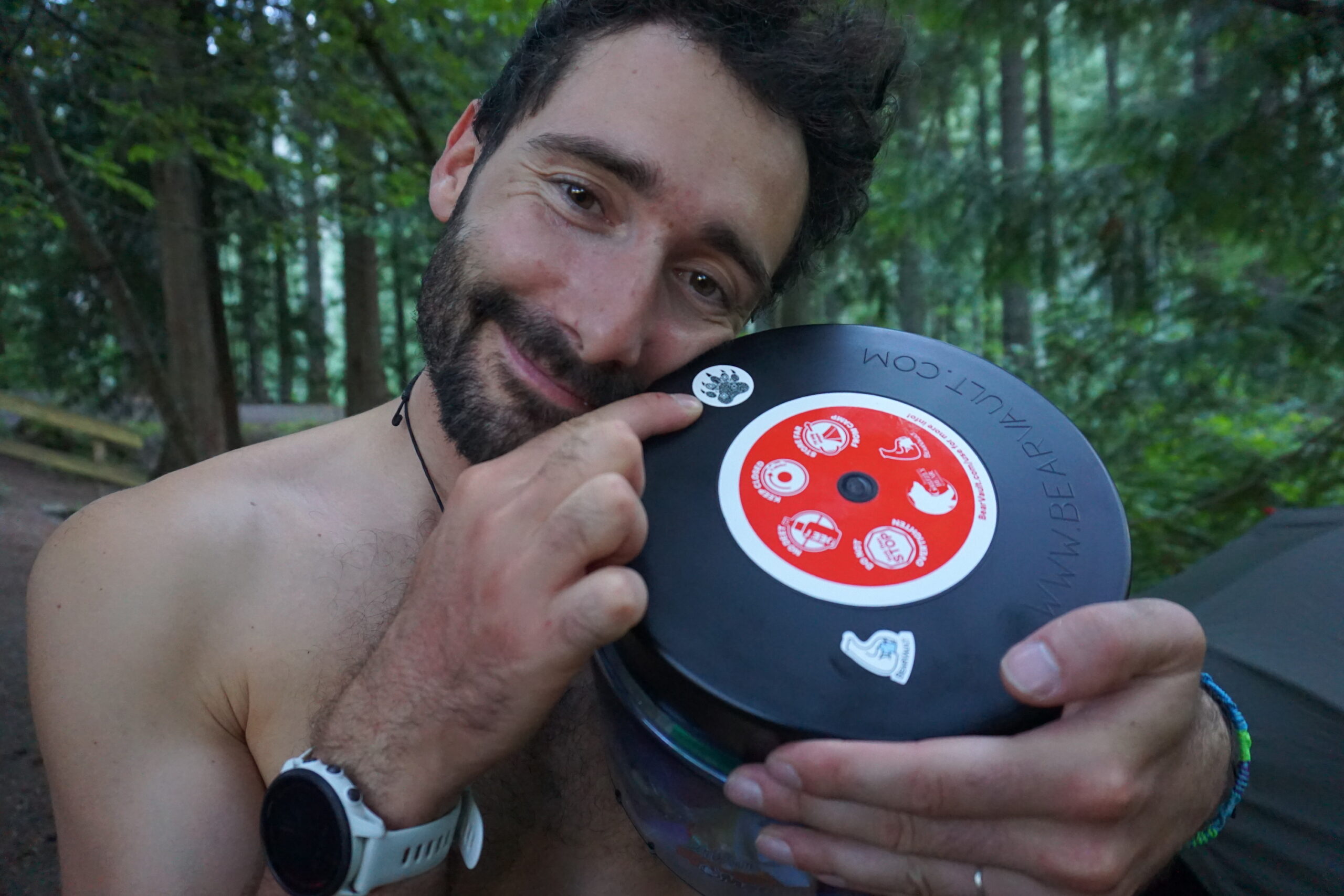
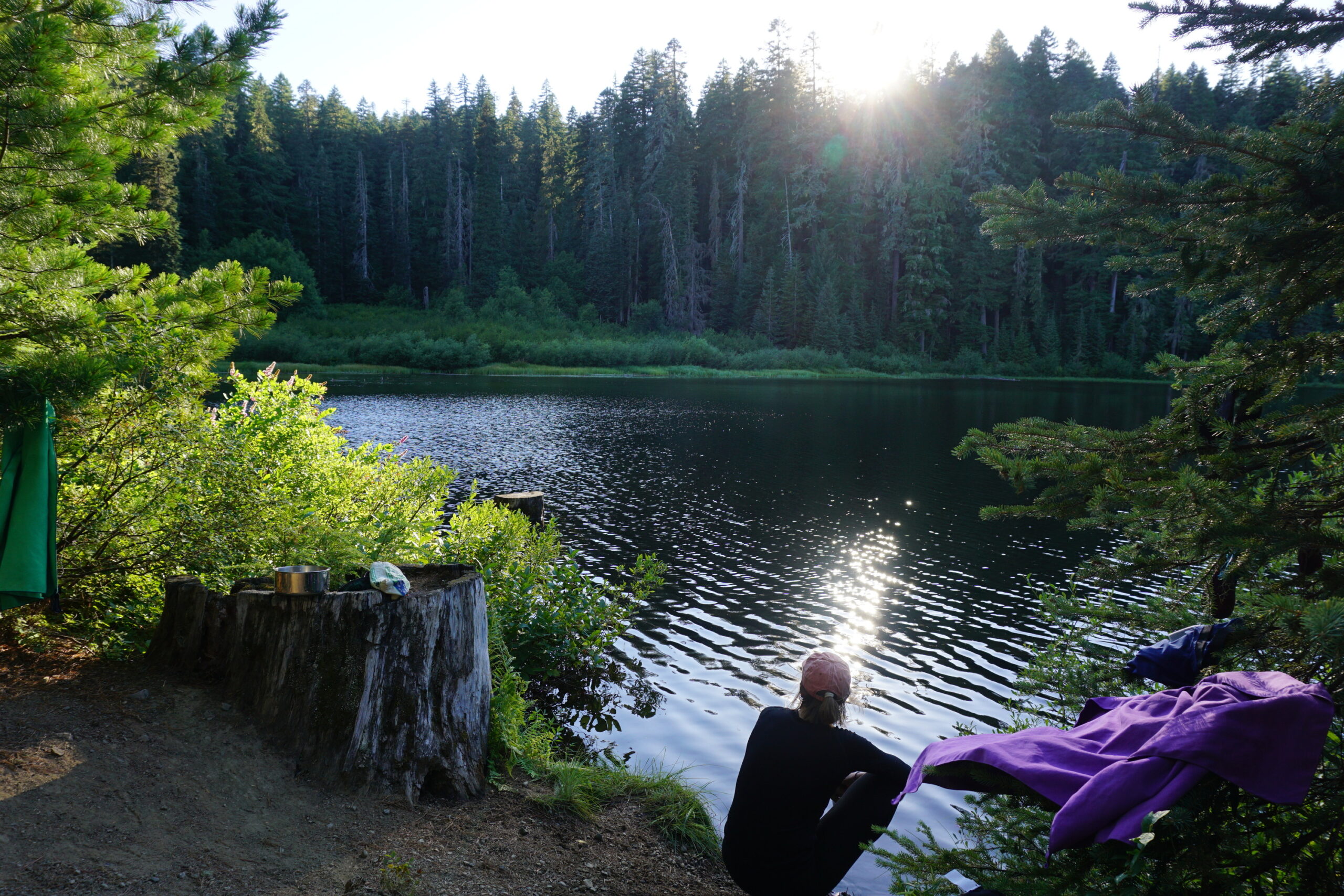
Another new experience for us is that we’re now in “Bear and Cougar Country” (as it’s called here). Feeling a bit uneasy, we bought a bear-proof container (a large hard-plastic bin that a bear can’t open) and bear spray while we were still in Portland. The likelihood of encountering one of these animals is very low, but we want to be better prepared and have also carefully read all the safety guidelines for this area. For our daily camping routine, this means: in the evening before going to bed, stowing all food in the bear-proof container and keeping it about 100 meters away from where we sleep, and not storing anything with a strong odor—like toothpaste, sunscreen, or lip balm—in the tent, but stowing those items bear-proof as well. Additionally, we don’t sleep right where we cook or eat. Yes, it’s a bit of a hassle in the evening, but better safe than sorry—and even if there aren’t any bears around, this also protects our food from small rodents like chipmunks.
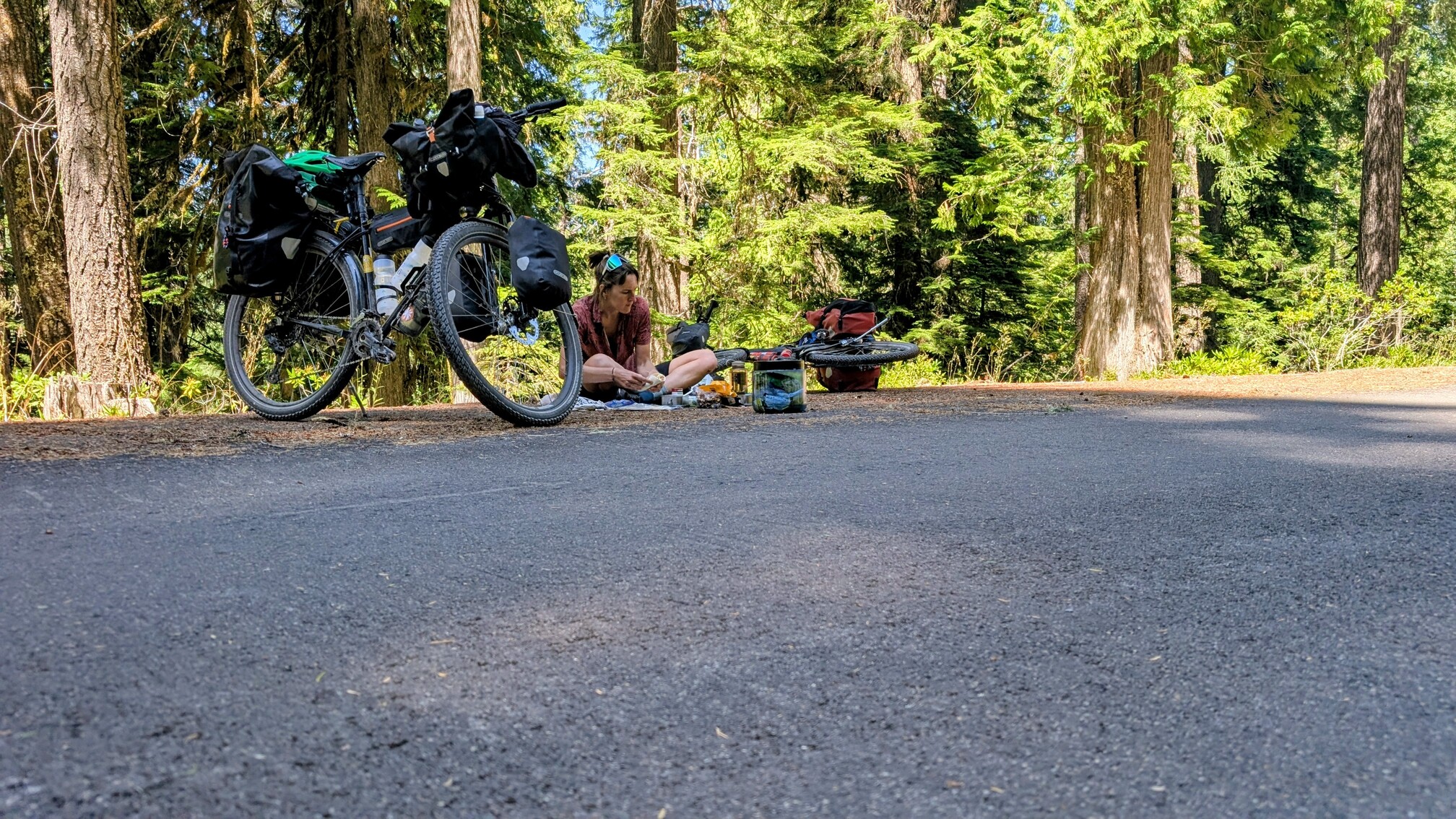
Our food is sacred to us here. We’re cycling up a lot of elevation—there are days when we pedal uphill for up to 1,400 meters elevation gain—so of course we need plenty of calories to have enough energy for that. If someone had watched us cycling uphill recently, they probably would have just shaken their head. Two sweaty figures on heavily loaded bikes, singing and making loud noises as they conquered a gravel road uphill. We were trying to be extra loud and draw attention to ourselves because we’d suddenly spotted a “cat” that was a bit too big to be a house pet. Paul said, sounding a bit alarmed, “Did you see that? There aren’t any big cats around here!” We assume it was a baby puma or something similar; the animal was gone in an instant. Normally, they don’t attack humans, especially not when people are making a lot of noise and making themselves look very big. For us, that meant trying to make ourselves look even bigger on our bikes while singing loudly at the same time—which didn’t exactly make the climb any easier.
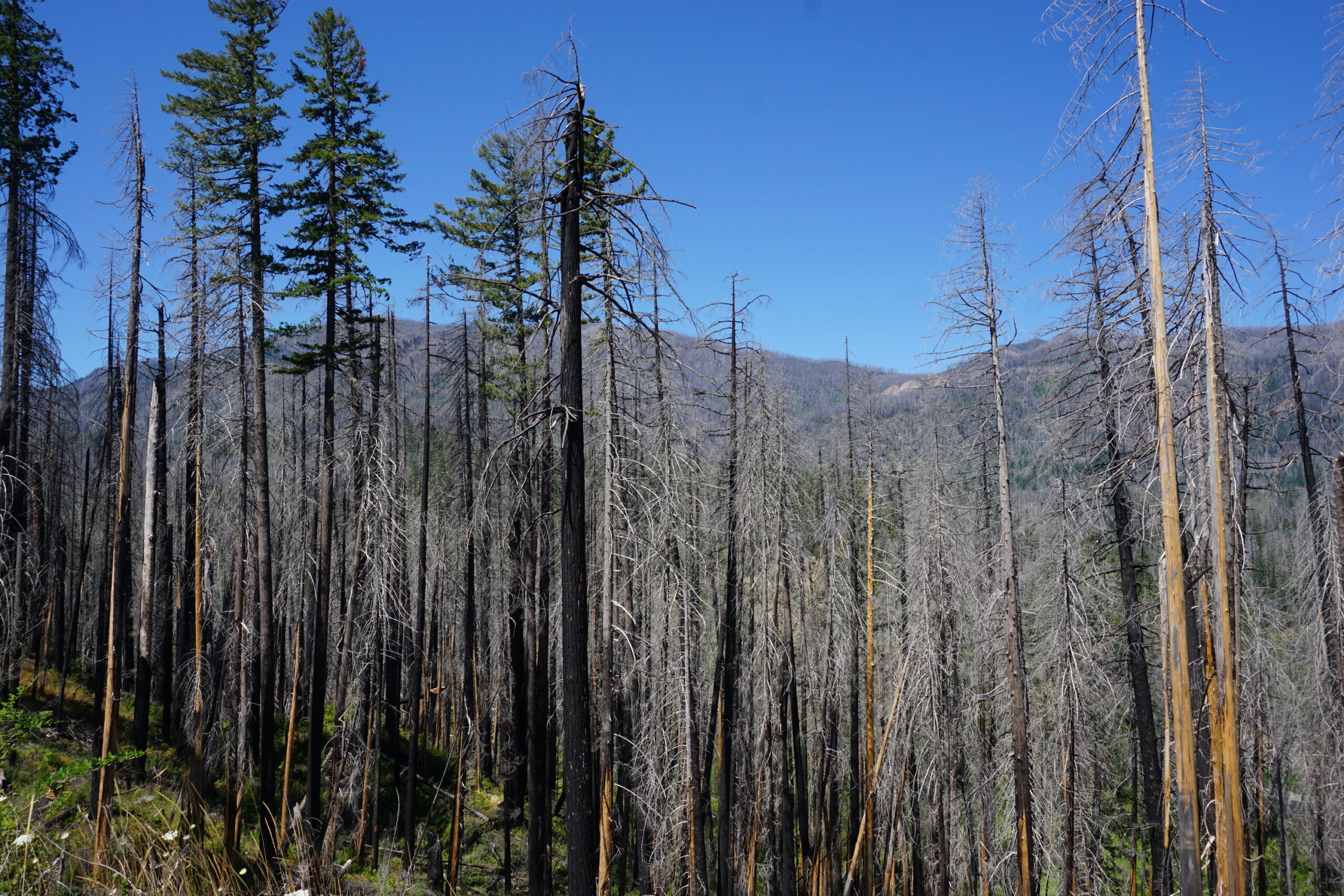
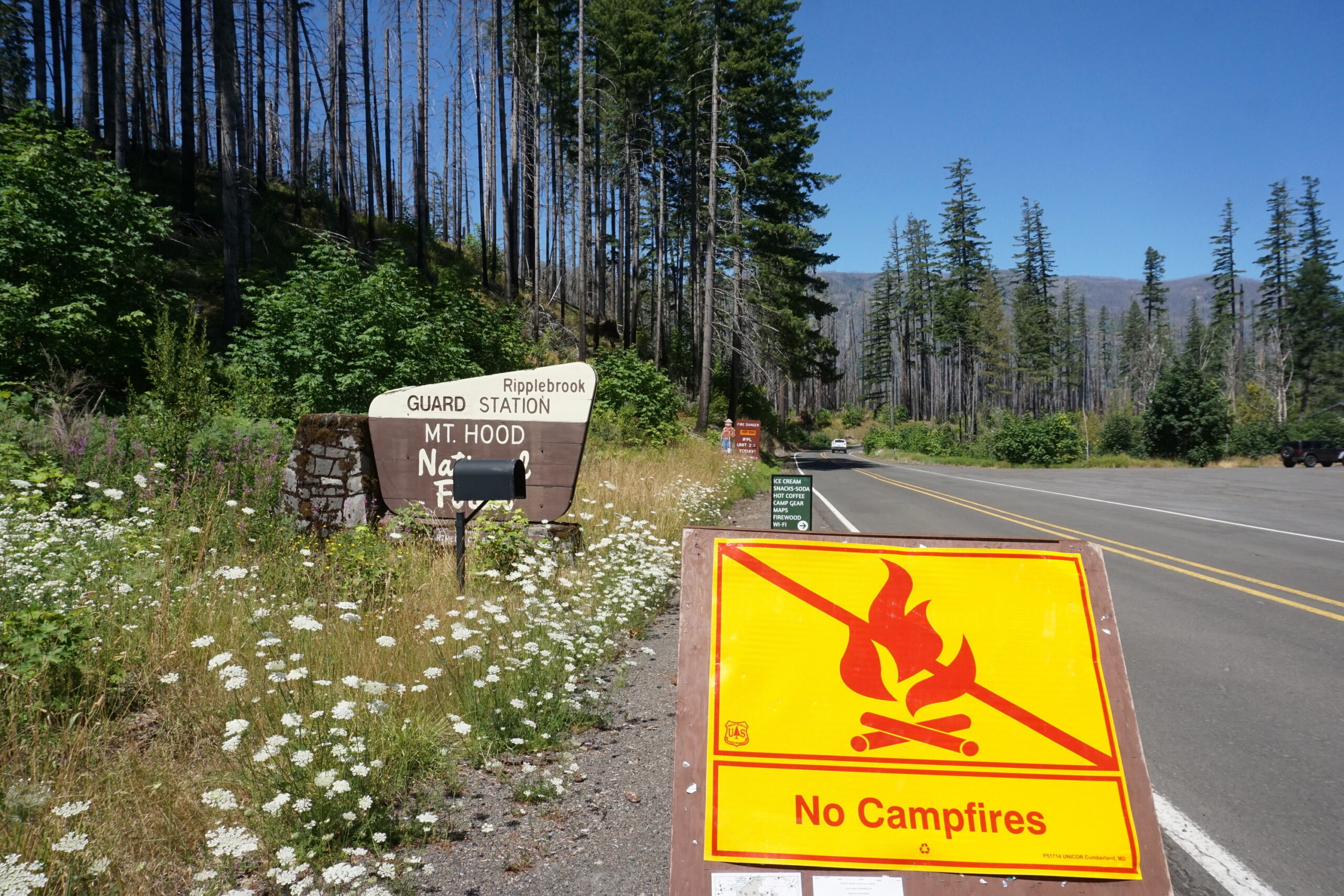
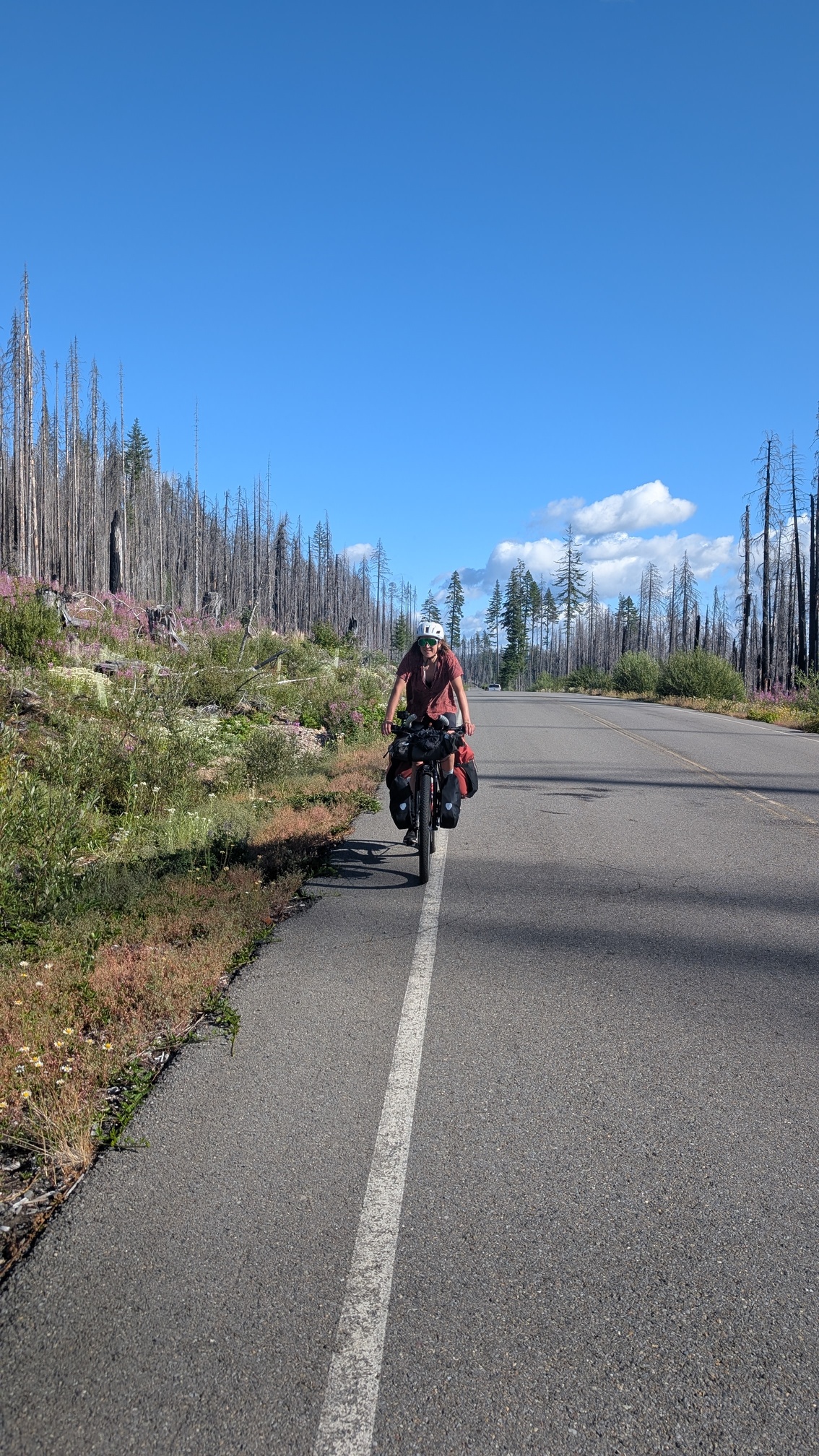
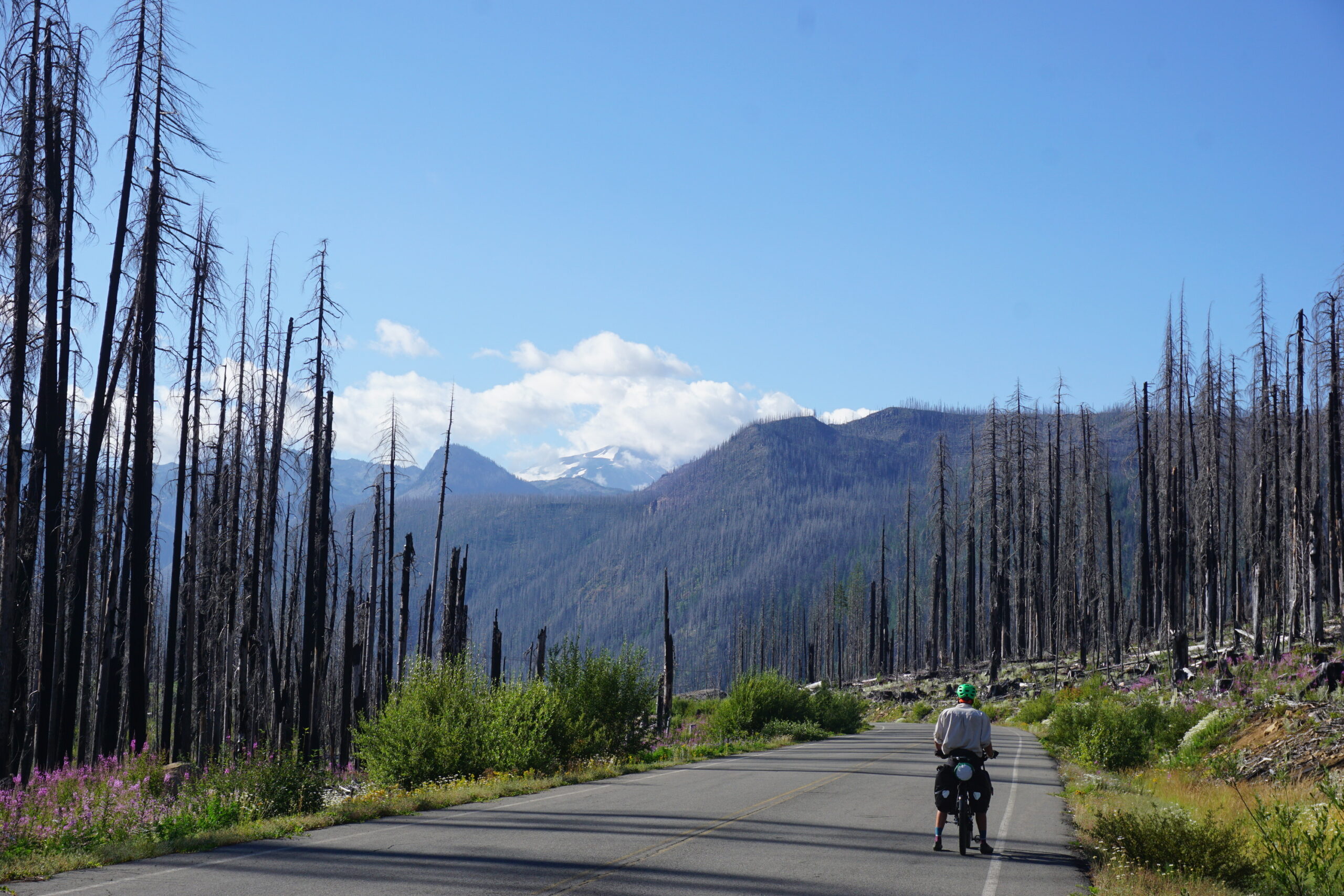
The landscape here is green and dense—when it hasn’t been burned. For the first few days, we cycled many, many kilometers through burned-out forests. About seven years ago, there were massive wildfires here in this region of Oregon that devastated large areas. Even several years later, nature here is still far from having recovered. In some places, bushes and grass are growing again, and in others, purple flowers dot the scorched landscape. However, many of the charred and dead tree trunks are still standing and are falling only slowly. Numerous warning signs alert us to the danger they pose.
While many wildfires are raging in Europe right now as well, everything here is far too dry this year and the risk of wildfires is very high. In the state of Oregon, where we’re currently staying, dozens of fires are also raging—fortunately, none of them are on our route. But the damage to nature, people, and animals is unimaginable… The smoke, which has caught up with us a few times over the last few days and shrouds the entire landscape in a kind of haze, is also depressing.
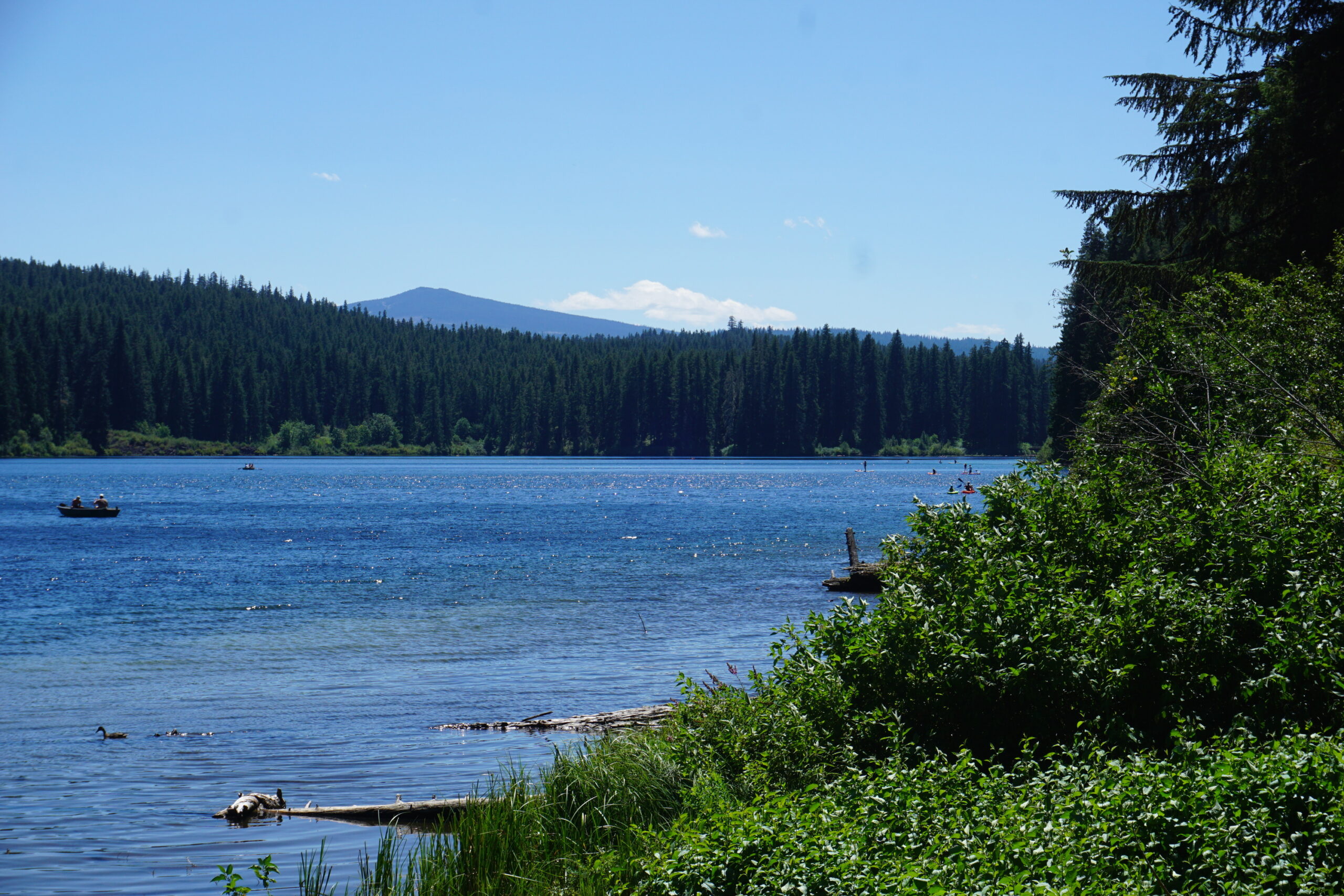
What really revitalizes us and encourages us to keep cycling are the cool, refreshing streams and rivers. It’s also incredibly convenient that we can easily get drinking water here using our water filter. It’s so wonderful to have the chance every evening to wash ourselves in a stream or a creek and crawl into the tent feeling fresh—a little luxury in the life of a cyclist.
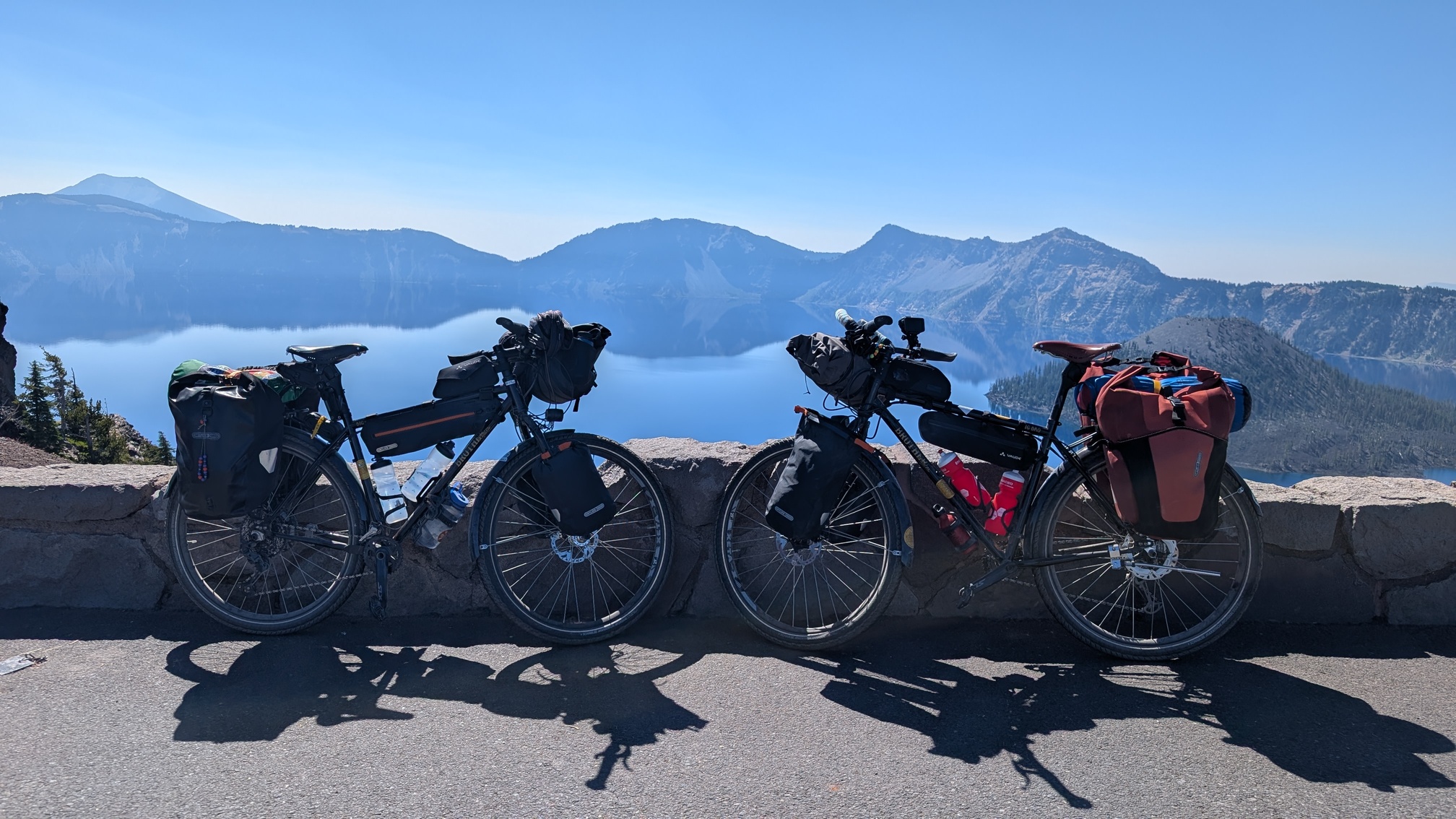
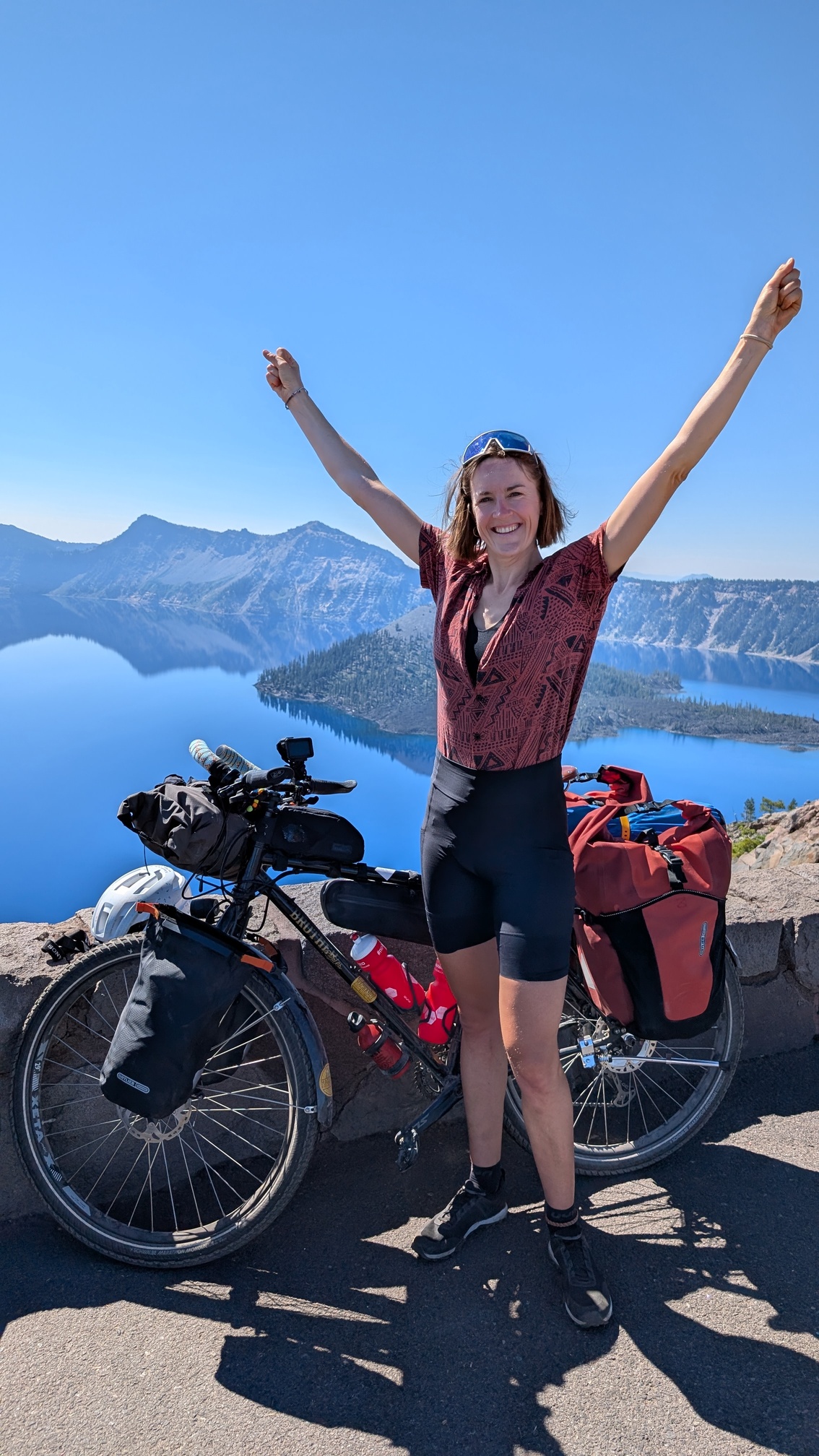
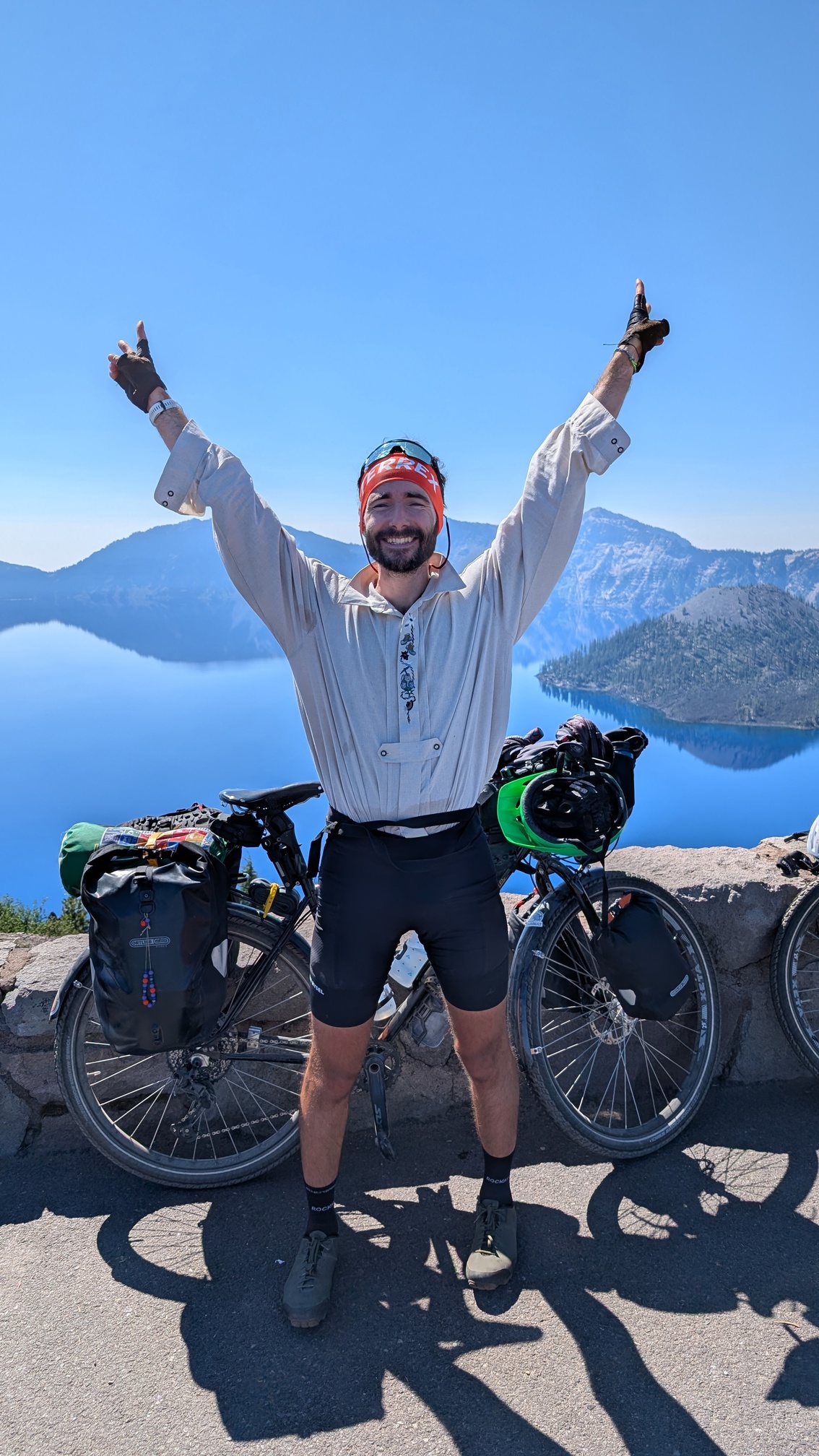
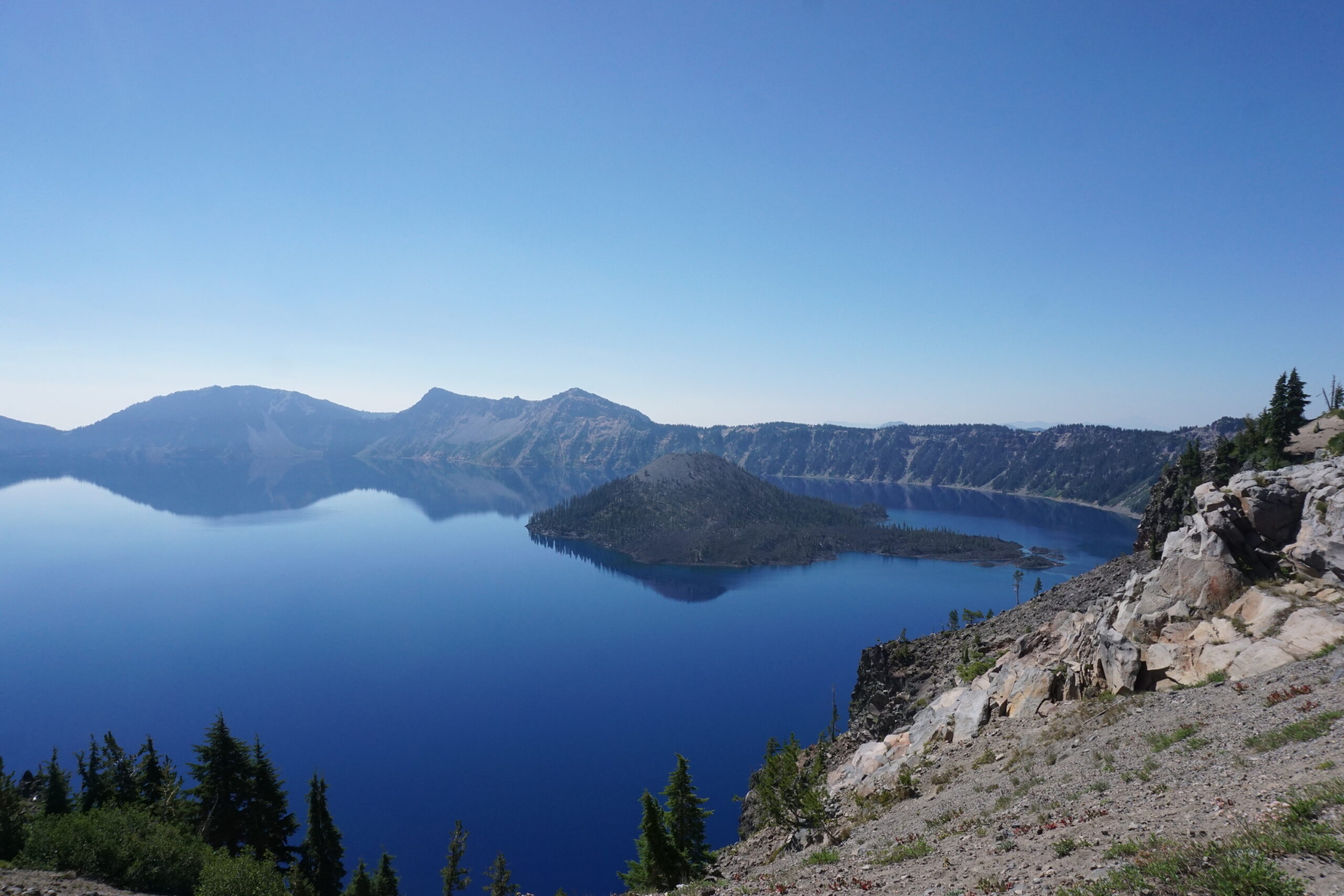
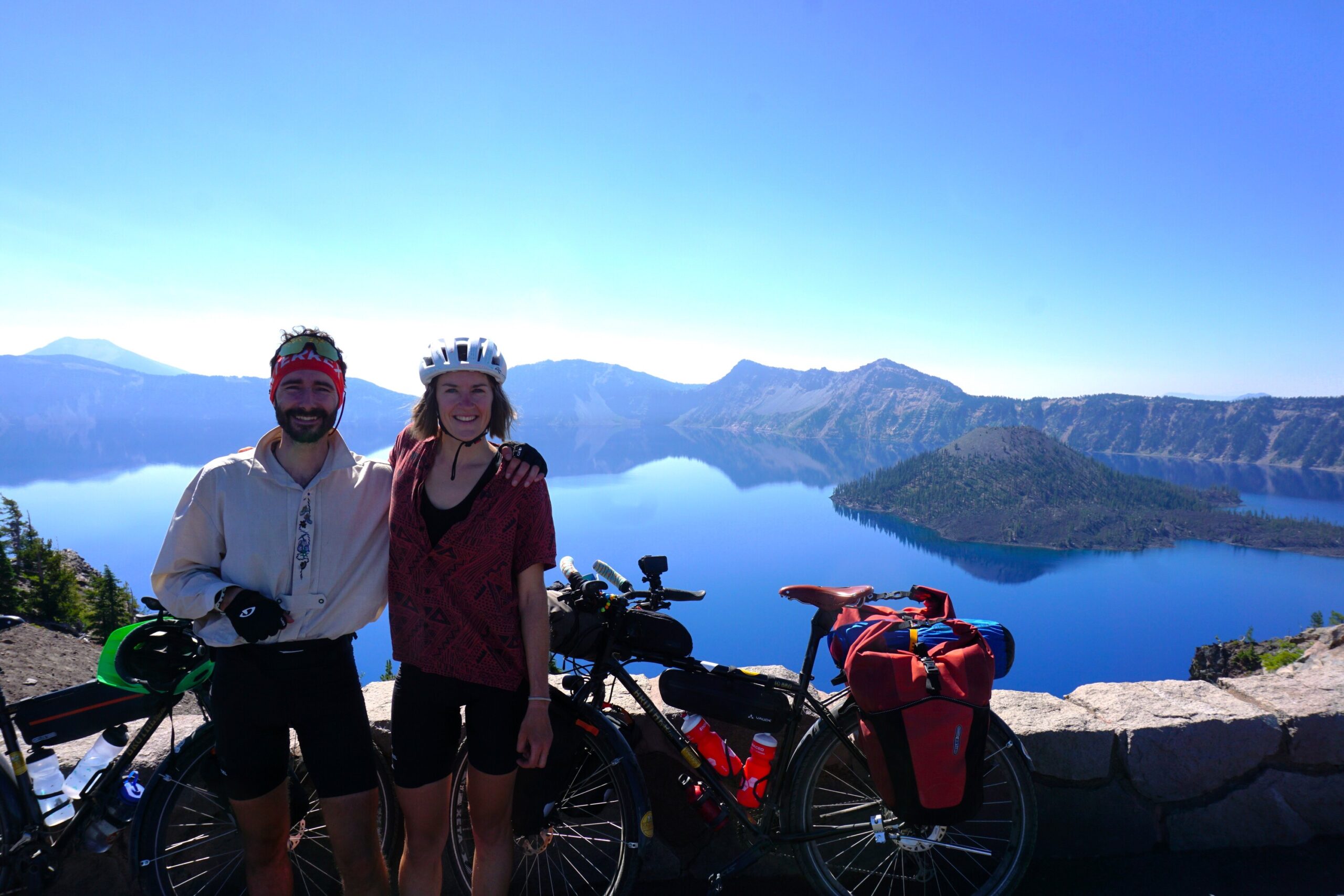
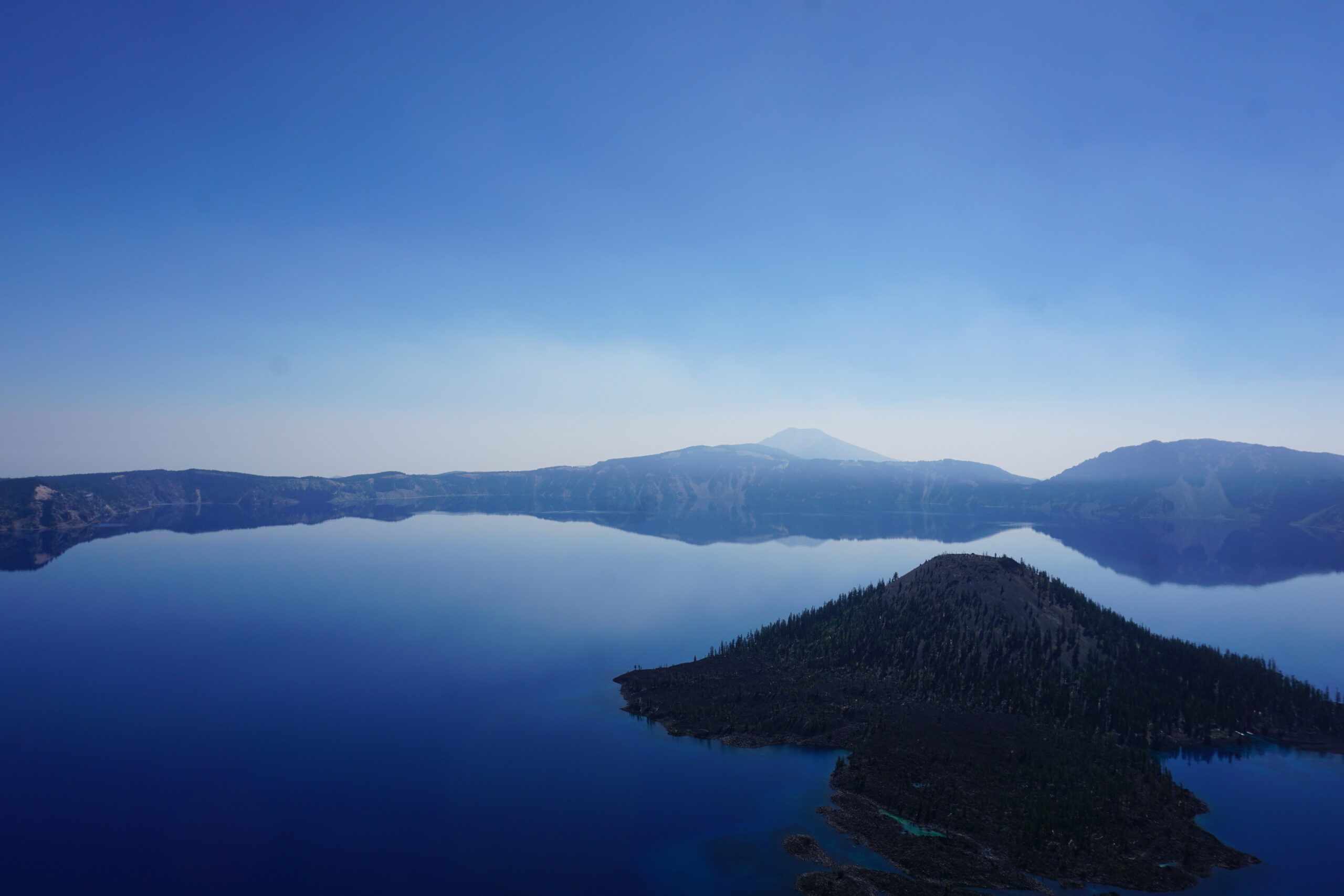
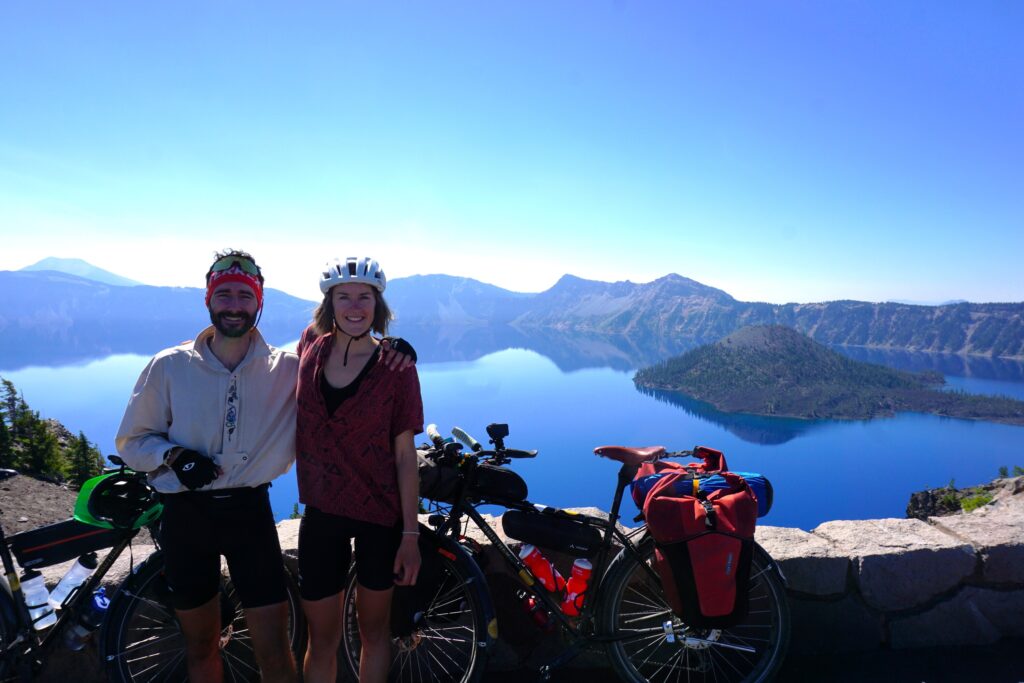
A few days later: After a few days on the OCVA Trail, today we can celebrate having completed it… The crowning finale was Crater Lake, the deepest lake in the U.S., located at an elevation of 2,400 meters. The climb made us break a sweat, but the view was well worth the effort. And so was the 30-kilometer descent 😉 We’ve now arrived in Klamath Falls, have the first 1,000 kilometers in the saddle behind us, and are treating ourselves to a rest day tomorrow before heading off to California.
Since I’m currently carrying John von Düffel’s book “Das Wenige und das Wesentliche” as my second travel companion (thanks, Laura!), here’s a quote from him that has been on my mind during the last few kilometers: “If it’s essential, a little is enough. I myself am the measure of how much is enough. […] When I know what is enough for me, I know who I am.”